Mobile Unit Snapshot: B5 A Scalable, Single Expando Support Trailer Built for Live Broadcast Engineering, Audio, and REMI Workflows

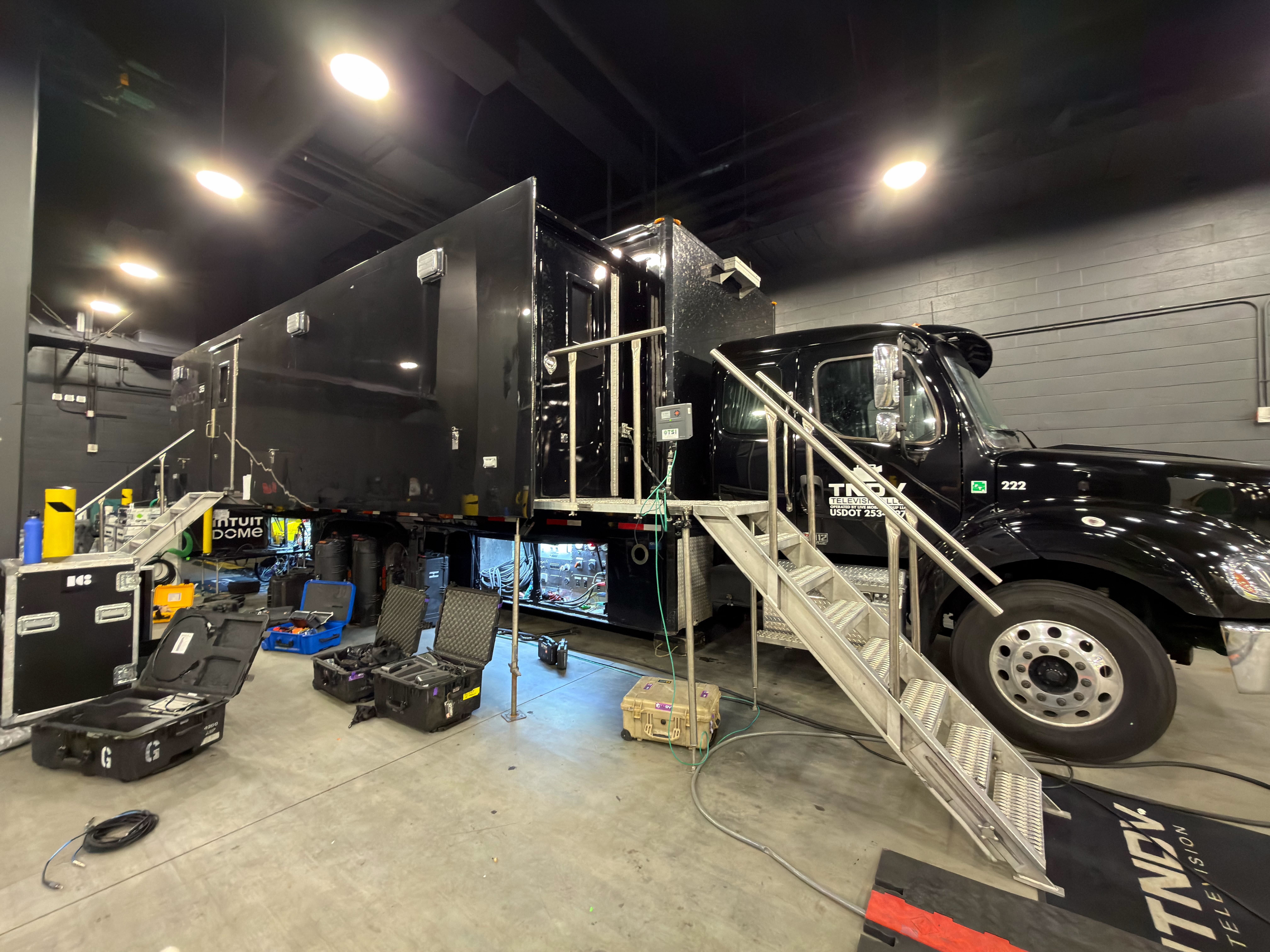
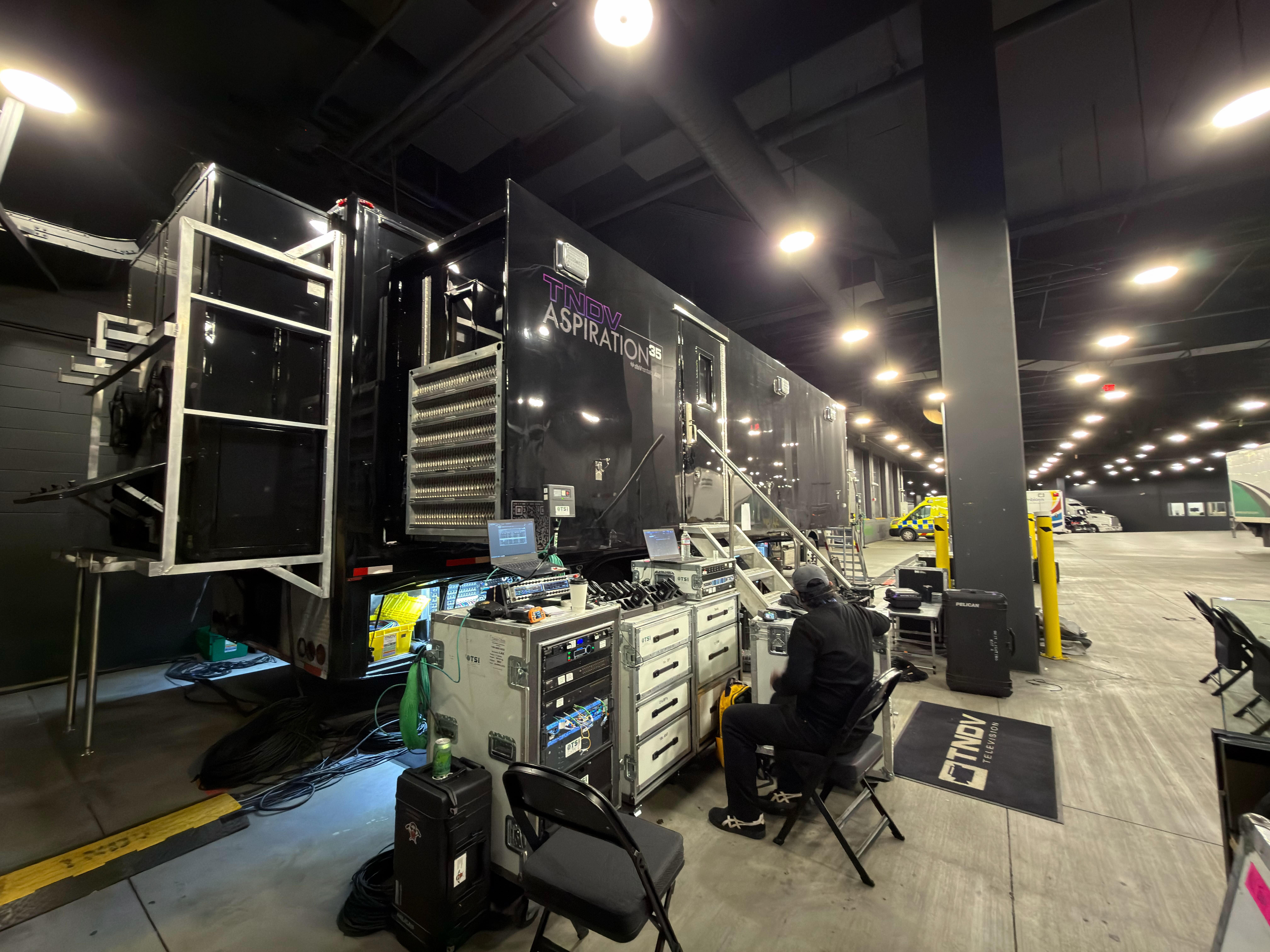
For sophisticated live production environments, engineering and operations teams need more than just switchers and servers—they need space to work, organize, and manage signals at scale. The MU-B5 support unit was designed to meet that need. A 53-foot single-expando trailer, MU-B5 functions as a flexible workspace for broadcast engineers, comms operators, and audio supervisors who require operational clarity and physical separation from the main control room.

Built by Live Media Group, MU-B5 delivers field-ready infrastructure that supports remote productions, REMI workflows, festival coordination, and national-scale sports events. With 10 modular workstations, a climate-controlled environment, and per-show cabling configurations, MU-B5 ensures your crew has the room—and resources—they need to execute at the highest level.

Designed for Flexibility, Engineered for Productivity

MU-B5 features a full-length single expando that increases the trailer’s working width to nearly 20 feet, enabling a segmented but collaborative environment. The interior layout is divided into four core zones, each with a distinct purpose and infrastructure:

  • Chapman Storage Bay: Located at the rear, this load-out area features shelving and open space for flypacks, fiber drums, expendables, and camera gear. It’s accessible via both rear ramp and side door, allowing fast ingress and egress for field operations.
  • Engineering / Cushman Bay: A climate-controlled technical room optimized for system integration, patch management, and routing. It offers counter workspace and is ideal for broadcast engineers, tech managers, or EICs.
  • Audio / Office Room: A smaller enclosed room suited for comms control, audio coordination, or production management. It’s frequently used by A1s or production supervisors for show calling, comms routing, or IP phone integration.
  • Flex Work Zones 1 & 2: The heart of the expando section, these zones include seating for up to six operators and can be customized for fiber patching, IP routing, communications control, or event coordination.

This configuration makes MU-B5 ideal for shows that require technical modularity, clean signal paths, and flexible team coordination, whether operating REMI or centralized production workflows.

Custom Cabling for Custom Shows

No two shows are the same—and MU-B5 is built with that in mind. For each deployment, Live Media Group provisions the trailer with a custom cabling package that can include:

  • Triax Camera Cable for legacy compatibility
  • SMPTE Fiber for UHD and IP workflows
  • DT12 Audio Multicore for booth/stage feeds
  • TAC-12 Tactical Fiber for long-range connectivity
  • XLR and 4-Pair Audio for analog audio patches
  • 5-Wire and 10-Wire Coaxial Looms for SDI and RF

The result is a fully customizable cable lab on wheels, ready to handle complex patching needs without disrupting the control room or main production vehicles.

Reliable Power & Climate Control

MU-B5 is powered by single-phase 208V service at 150 amps, making it compatible with venue drops or generator-based compounds. The onboard Camlock power input ensures rapid setup and clean integration with larger shows.

Inside, full HVAC ensures thermal stability for rack-mounted gear, patch bays, and personnel—crucial for long shoot days or temperature-sensitive operations.

Ideal Applications for MU-B5

MU-B5 shines in any high-capacity or distributed broadcast environment where field engineering, REMI integration, or offboard audio/comms require a dedicated space. Common use cases include:

  • REMI & hybrid production staging
  • Mobile comms and IFB coordination
  • Audio infrastructure for multi-stage festivals
  • Flypack launchpad for camera and fiber prep
  • Engineering zone during venue transitions
  • Overflow crew workstations when main trucks are at capacity

When deployed alongside units like MU-10, MU-14, or MU-28, MU-B5 acts as an infrastructure multiplier, giving tech crews the ability to offload cable management, routing, and equipment prep—without impacting core broadcast operations.

Why MU-B5 Stands Out

The MU-B5 fills a critical niche in today’s event production world. While many trucks focus on switching, replay, or transmission, MU-B5 focuses on the support systems that make them all work together. Its single-expando design strikes a balance between compact travel and expansive internal space. Its modular zones allow for precise team deployment, and its custom cable configuration adapts to your show’s needs.

For production teams juggling comms, fiber, patching, and IP management, MU-B5 becomes the quiet hero behind the scenes—making sure your signal arrives clean, clear, and on time.

FAQs for MU-B5

What is the MU-B5 trailer used for?
MU-B5 is a mobile support trailer used for engineering, audio, and production team operations during live broadcasts and REMI productions. It provides workstations, storage, and climate-controlled space near the truck compound.

Does MU-B5 include any switching or replay capabilities?
No. MU-B5 is not a production or replay truck. It is a support unit designed for offboard work such as patching, comms coordination, IP routing, and engineering support.

How many operators can work inside MU-B5?
MU-B5 has 10 configurable operator positions, including shared desk space and enclosed workrooms.

Is MU-B5 compatible with flypacks and REMI workflows?
Yes. MU-B5 is frequently deployed as a REMI staging trailer or flypack base, thanks to its modular cable design and work zones.

Can MU-B5’s cabling be customized for my event?
Absolutely. Live Media Group provisions MU-B5 with a custom cable inventory for each show, including SMPTE, DT12, TAC fiber, coax, and triax.

What kind of power does MU-B5 need?
MU-B5 runs on 208V single-phase power at 150 amps, using a Camlock connector for tie-in to generators or shore power.

Does MU-B5 offer climate control?
Yes. MU-B5 includes full HVAC support to keep gear and crew cool and operational—even in extreme environments.

Is MU-B5 available for rental?
Yes. Contact Live Media Group at 833.933.54483 or email solutions@livemediagroup.com for availability and scheduling.

Mobile Unit Snapshot: B3 A 53’ Straight Support Unit for Live Broadcast Engineering & Field Production

As live broadcasts and remote productions scale in size and complexity, technical teams need more than just switching and camera trucks—they need structured, efficient support environments where operations can run smoothly. Enter MU-B3, a 53-foot straight support trailer from Live Media Group’s mobile infrastructure fleet.

Built to serve as an engineering, audio, or production annex, MU-B3 provides a climate-controlled workspace with 10 operator positions, segmented zones, and per-show cabling options. Whether used for REMI staging, audio system prep, engineering patching, or flypack support, this non-expanding trailer is the backbone for live event teams who require both mobility and reliability.

Purpose-Built for Technical Production Teams

MU-B3 is not a switching or replay truck. Instead, it’s where the support happens. Technical personnel, producers, and integrators can collaborate here without crowding the primary production vehicle. With its straightforward, modular layout and robust infrastructure capabilities, MU-B3 excels in environments where space, order, and cable control are vital.

It’s particularly useful for:

  • Engineering teams managing signal flow and fiber routes
  • Audio and comms leads prepping IFB and intercom systems
  • Production managers overseeing show documentation and tech plans
  • Flypack crews organizing camera builds, cases, and field gear

Interior Layout Designed for Workflow Efficiency

MU-B3’s internal layout mirrors that of its sister unit, MU-B1, with clearly segmented functional areas to avoid cross-talk, cable confusion, and workspace congestion.

  • Chapman Storage Room (Rear)
    Accessible via ramp, this storage space includes shelving for flypack racks, cable drums, camera kits, and expendables. It serves as a secure gear landing zone.
  • Cushman and Audio/Office Room
    An enclosed private space for audio prep, comms control, or production planning. Ideal for leads who require phone access, quiet comms coordination, or onsite management.
  • Main Production Bay
    The center of MU-B3 features seven operator positions along a shared deskline. Perfect for technical directors, fiber patch engineers, or network support personnel to work side-by-side.
  • Engineering Bay (Front)
    Positioned near the power distribution and environmental systems, this space is optimized for patching, signal monitoring, and infrastructure coordination.

This physical separation of disciplines allows your team to focus on their task without interference from other departments—all while working in proximity for fast communication and handoffs.

Mobile Cabling & Signal Infrastructure

MU-B3’s cabling is configured per project, ensuring that the trailer adapts to your event rather than the other way around. Standard cable packages available for deployment include:

  • Triax camera cable
  • DT12 audio multicore
  • SMPTE hybrid fiber
  • TAC-12 tactical fiber
  • Analog XLR audio
  • SDI coaxial looms (5- or 10-wire)

This makes MU-B3 incredibly versatile—serving as a mobile patch room, fiber terminus, or temporary production extension depending on the needs of the event.

Power and Environmental Design

  • Power: Single Phase, 208V @ 150A
  • Connection: Camlock input for integration with on-site generator or shore power
  • Cooling: Full HVAC climate control throughout the trailer

These specs support full-day field operations and ensure a stable environment for personnel and rack-mounted gear, even during high-temperature or high-traffic shows.

Ideal Applications for MU-B3

MU-B3 is a go-to solution when your crew needs structure, scalability, and flexibility on location. Use it as:

  • A mobile engineering annex during REMI productions
  • A production office for field supervisors and coordinators
  • A comms and audio prep room for IFB, PL, and routing
  • A patching and fiber hub for multi-camera or flypack shows
  • Overflow workspace when main control trucks are at capacity

Whether paired with trucks like MU-10, MU-14, or MU-28—or standing on its own—MU-B3 provides the infrastructure that keeps large events running smoothly.

Why MU-B3 Stands Out

MU-B3 is the backbone of technical coordination. While it doesn’t have switchers or EVS replay servers, it houses the people who control them, and it gives them the space to work clearly, effectively, and comfortably. Its non-expando format makes it easier to deploy in tighter truck compounds, while its modular zones and 10 operator positions deliver the capacity needed for modern production demands.

When multiple crews are working onsite or a centralized flypack strategy is in play, MU-B3 ensures that your engineering, audio, and production workflows have room to breathe.

FAQ for MU-B3

What is MU-B3 used for?
MU-B3 is a mobile support trailer used for engineering, audio, and production support during live events and remote broadcasts. It does not include switching or replay systems, but it provides workspace and infrastructure for technical teams.

How many people can work inside MU-B3?
MU-B3 supports 10 working positions across multiple zones, including a main production bay and private office areas.

Does MU-B3 include any built-in cabling?
Cable packages are custom-configured per show. Available options include Triax, DT12, SMPTE, TAC-12, XLR, and coaxial looms.

Can MU-B3 be used with REMI or flypack productions?
Yes. MU-B3 is ideal for REMI workflows and flypack integration. It often serves as a field engineering trailer or fiber patch hub.

Is MU-B3 climate-controlled?
Yes. MU-B3 features full HVAC to maintain a stable operating environment for equipment and staff.

Does MU-B3 have power requirements?
MU-B3 requires 208V single-phase power at 150 amps, with Camlock input for generator or shore power tie-in.

Can MU-B3 serve as a mobile production office?
Absolutely. The interior includes enclosed spaces and operator seating ideal for production management, comms coordination, or field admin work.

How is MU-B3 different from MU-B1?
MU-B3 shares a similar layout with MU-B1 but offers expanded scheduling flexibility and deployment across additional event zones.


MU-B3 is available for rental or integration planning. Cable sets, operator positions, and floorplans can be customized.

Phone: 833.933.54483
Email: solutions@livemediagroup.com

Mobile Unit Snapshot: B1- A Mobile Support Unit Built for Modern Broadcast Engineering, Audio, and REMI Workflows

In today’s fast-paced live production landscape, mobile teams need more than just switchers, cameras, and uplink systems—they need space. Purpose-built to meet that need, the MU-B1 is a 53-foot straight support trailer engineered to give broadcast crews room to work, organize, stage, patch, coordinate, and collaborate without being crammed into control trucks or makeshift production tents.

Whether you’re running a REMI event, operating a multi-truck compound, or supplementing a flypack deployment, the MU-B1 functions as a mobile broadcast backbone, providing essential workspace for engineering, audio, and production support teams. With a non-expanding structure, internal climate control, power infrastructure, and custom cable configurations, MU-B1 is a must-have for shows that require more infrastructure than one truck can deliver.

A Dedicated Space for Offboard Broadcast Operations

MU-B1 isn’t a switcher truck or replay unit—it’s something different and equally important. It’s a support environment designed for the people and systems that make the rest of the show run smoothly. From engineering teams staging fiber routing and audio techs managing patch panels, to producers needing space to coordinate crews, this unit creates physical separation of functions while keeping everyone close to the action.

At 53 feet long, the trailer provides a recommended working footprint of 61 feet by 18 feet. Inside, there are 10 full workstations, including seating and access to power, networking, and audio cabling. The trailer includes clearly divided areas for production, engineering, audio coordination, and logistics, with internal air conditioning and custom layouts to meet the needs of different crews and event types.

Floorplan Built for Collaboration & Efficiency

The MU-B1’s interior layout is a key part of its utility. According to the official spec floorplan:

  • The Chapman Room is accessible via front-load ramp, offering easy storage and fast access for large equipment or cable runs.
  • The Cushman Area and adjacent Audio/Office zones offer quieter space for mix engineers, recordists, or producers who need to work on-site but away from the main production noise.
  • The Production Workspace includes multiple seated operator positions—ideal for REMI monitoring, ingest coordination, or broadcast scheduling.
  • The Engineering Bay at the rear of the trailer includes power access, HVAC controls, and critical routing infrastructure for triax, SMPTE, DT12, TAC, and coax.

This layout enables divided but collaborative workflows, letting audio, engineering, and production teams operate in parallel without stepping on each other.

Power and Climate Control Designed for All-Day Use

MU-B1 runs on a single-phase, 208V, 150A power draw, using a standard Camlock connection. That makes it easy to pair with other mobile production vehicles or shore power in venue-based applications. With internal air conditioning and zoned airflow, MU-B1 maintains comfortable working conditions for both crew and equipment—critical during long shoots or high-heat festival and sports environments.

Customizable Cable Infrastructure Per Show

MU-B1 doesn’t just provide space—it acts as a mobile cable and signal hub. Each deployment is custom-configured based on the production’s signal routing needs and compound layout. Common cable inventories include:

  • Triax for legacy camera infrastructure
  • SMPTE hybrid fiber for UHD/IP workflows
  • DT12 audio multicore for stage and booth feeds
  • XLR and 4-pair for analog and multichannel routing
  • TAC-12 tactical fiber for long-distance connectivity
  • Coax (SDI/RF) for video return and RF monitoring

This makes MU-B1 an essential patch and distribution point, especially when paired with high-capacity production trucks like MU-10, MU-11, or MU-28.

Use Cases: Where MU-B1 Really Shines

MU-B1 is not a one-trick pony—it’s a field operations chameleon that adapts to a range of live production demands. Ideal for:

  • Flypack system support: When your flypack team needs a clean, powered, climate-controlled workspace.
  • REMI staging: Pair with trucks like MU-27 or MU-29 to support camera, audio, and signal flow to centralized control rooms.
  • Overflow workspace: Add crew capacity during multi-truck shows or dense compounds.
  • Cable management: Serve as your central signal routing point and spool center.
  • Mobile broadcast HQ: Use MU-B1 as a command-and-control vehicle on large-scale entertainment, sports, or festival sites.

Why MU-B1 Is the Broadcast Utility Truck You Didn’t Know You Needed

MU-B1 isn’t flashy—but it’s essential. In an era of increasingly complex live production compounds, the ability to provide infrastructure, isolation, and organization makes all the difference between smooth execution and signal chaos. MU-B1 gives technical directors, broadcast engineers, A1s, and crew managers the tools and space they need to build robust shows without relying on cramped quarters or makeshift setups.

From major concerts and sports broadcasts to REMI production staging and hybrid compound deployments, MU-B1 is your mobile infrastructure solution—quietly powering the broadcast behind the broadcast.

For rental inquiries, custom cable configurations, or deployment details:
Phone: 833.933.54483
Email: solutions@livemediagroup.com

Mobile Unit Snapshot: MU-30 The Compact, All-in-One Broadcast + C-Band Uplink Truck for Remote Events

In a broadcast environment that demands speed, versatility, and reliability, the MU-30 emerges as the perfect blend of live production capability and satellite transmission power—all packaged into a nimble, single-expando footprint. Designed by TNDV as a fully integrated 3G HD mobile production and uplink unit, MU-30 delivers studio-grade acquisition, switching, audio, and live satellite distribution in a space-saving, field-ready truck.

Built for mid-size sports, political events, public affairs coverage, and live news programming, MU-30 is ideal for production teams who need everything—camera capture, replay, audio, comms, and satellite uplink—in a single vehicle, ready to deploy wherever the story or action unfolds.

Built for On-Site Production & Instant Uplink

At just 46 feet in trailer length with a single-expando chassis, MU-30 offers a compact footprint but a powerful punch. Once deployed, it spans 21 feet wide and reaches a full height of 22 feet when the 2.4-meter AVL C-Band satellite dish is raised. Its 1-phase power requirement (200A @ 208V) and 150’ camlock feeder cable make it a perfect choice for quick-turn setups or venues with limited infrastructure.

The real differentiator? MU-30 doesn’t just capture content—it can transmit it live via satellite. Featuring dual 300-watt Advantech SSPBs, Adtec EN-100 encoders, and Adtec RD-70 receivers, MU-30’s satellite system supports redundant feeds, backup distribution, or primary live uplink, eliminating the need for auxiliary flypacks or separate uplink vehicles. This is true broadcast mobility.

Full Studio-Grade Production in a Mid-Sized Frame

MU-30 is powered by a Grass Valley K-Frame switcher paired with a Kayenne 4-stripe, 35-button panel, offering 5 M/Es, 64 inputs, and 48 outputs. The switcher supports FlexiKey™, Double Take, chroma keying, and advanced DPM layering with 16 iDPMs and a 2D DPM engine. An integrated ImageStore provides clip playout and transition capability, perfect for remote event coverage that demands dynamic visuals and transitions.

The multiview system supports 170×34 viewing capacity with dedicated monitor wall layouts for key positions including TD, Director, Producer, and AD—ensuring total visibility and confidence from every seat in the truck.

Replay & Playout Support

MU-30 includes a robust EVS suite to manage replay and playout:

  • (1) EVS XT3 6-Channel LSM Server
  • (1) EVS XT3 6-Channel Spotbox with Lance Controller
  • (1) EVS X-File3 for media transfers

Wired for up to three EVS servers, MU-30 supports instant highlight playback, ISO recording, and remote ingest—making it ready for sports and fast-paced live environments.

Advanced Routing & Frame Sync Infrastructure

Routing is managed through an NVision NV8280 3G/HD router, with a 242×360 matrix and 80×80 audio embedding/de-embedding. This provides the backbone for seamless switching, monitoring, and signal management. The truck includes (20) Cobalt 3G UDC frame syncs and (10) For-A 9600 frame syncs with integrated color correction—allowing for full signal alignment across sources. Tally is managed through an Image Video TSI-3000 controller to keep camera tally and crew communications in sync.

Camera Flexibility for Any Field Assignment

MU-30 includes a strong camera lineup with (8) Grass Valley LDX80 WorldCam cameras paired with fiber triax converters and five Super XPanders for full field deployment. The lens kit includes long throw and ENG options:

  • (3) Canon 86×9.3 HD box lenses
  • (1) Canon 72×9.3 box lens
  • (2) Canon 22×7.6 ENG zooms
  • (1) Canon 11×4.7 wide-angle

Wired for up to 10 CCUs, the camera package is ideal for news coverage, political stage events, small stadium sports, or press conferences.

Calrec Audio with Dante and MADI Backbone

Audio is handled by a Calrec Artemis Bluefin2 console, offering 48 faders and 240 DSP channels. The truck supports 96×120 analog I/O, 32×32 AES digital, 320×320 MADI, and 64×64 Dante IP audio. This gives MU-30 the power and routing flexibility to handle everything from live panel discussions and comms audio to multi-channel sports mixes.

Full Intercom Integration with RTS ADAM-M

The communications system is anchored by a RTS ADAM-M matrix with 166×166 ports. It supports 64 OMNEO channels, 16 RVON VoIP lines, and 12 powered channels for both intercom and IFB. The truck includes a full set of RTS BP325 belt packs, RTS 4030 IFB boxes, and a mix of Beyer single and dual muff headsets for robust field comms across engineering, talent, and production roles.

Satellite Uplink: Onboard, Redundant, and Ready

MU-30’s integrated 2.4m AVL C-Band antenna can transmit directly to satellite from the truck, enabling:

  • Live broadcast distribution
  • Redundant path coverage
  • Backup feeds in critical event scenarios

No separate uplink vehicle is required—saving cost, setup time, and footprint.

AV Support and Cabling

To support booth talent, sideline reporters, and camera ops, MU-30 carries a complete AV support kit including:

  • HMD26 headsets
  • Studio Tech boxes
  • MD46 stick microphones
  • MKH416, MKH807, and MKH418 shotgun mics
  • LED light kits
  • SDI monitors for field reference

Cable infrastructure includes 7000’ triax, 2100’ DT12 audio multicore, TAC-12 and TAC-4 fiber, and coax looms—ensuring signal integrity and distance flexibility for a wide range of deployments.

Why MU-30 Is the Smart Choice for Integrated Remote Production

With its single-expando footprint, studio-grade switcher, premium camera and audio package, and built-in C-Band uplink, MU-30 offers one of the most versatile, compact, and powerful mobile solutions for remote broadcast environments. It bridges the gap between OB van and uplink truck—reducing cost, complexity, and setup time.

Ideal for live political coverage, field news gathering, mid-sized sports, and redundant network feeds, MU-30 gives broadcast teams the power to produce and transmit from a single mobile command center.

For rental inquiries, custom cable configurations, or deployment details:
Phone: 833.933.54483
Email: solutions@livemediagroup.com

MU-28 REMI Broadcast Truck FAQ

MU-28 REMI Truck: Frequently Asked Questions

What is a REMI production truck?

A REMI (Remote Integration Model) production truck is a mobile unit that handles field-level video acquisition, camera control, routing, and contribution without performing in-truck switching or live mixing. Instead, it sends feeds to centralized or cloud-based control rooms where production is completed. REMI trucks are ideal for at-home broadcasting, hybrid workflows, and distributed production models.

What makes the MU-28 different from a traditional OB truck?

Unlike traditional OB (Outside Broadcast) trucks, the MU-28 is built exclusively for REMI workflows. It features a non-expando design, a rear liftgate for fast load-ins, and a fully IP-native ST 2110 routing core. It focuses on efficient camera acquisition, multiviewing, and contribution—leaving switching and directing to a centralized control facility.

What kind of IP infrastructure does the MU-28 use?

MU-28 is powered by an EVS Strada ST 2110 router with a 144×144 IP matrix. It includes 36×8 multiview outputs, 24×24 frame syncs with UDC and HDR LUTs, and 12×12 fiber I/O. This enables native support for ST 2110 uncompressed video workflows and full integration with centralized or cloud-based broadcast environments.

MU-28 Interior

How many cameras can the MU-28 support?

MU-28 supports up to 16 CCU-controlled camera channels. The standard package includes 13 Sony HDC-2500 cameras and 2 Sony HDC-4300 cameras, with large lens adaptors and a wide range of ENG and box lenses. Additional configurations are available upon request.

Does the MU-28 support remote intercom and IFB systems?

Yes. The truck is equipped with a 64-port RTS ODIN digital matrix intercom and supports RVON (VoIP), DANTE audio, and powered PL/IFB channels. It includes RTS KP-32 panels, belt packs, IFB boxes, and an Innkeeper hybrid phone system for full remote integration.

What types of events is the MU-28 REMI truck ideal for?

MU-28 is designed for national sports coverage, touring concerts, corporate remote broadcasts, multi-city event capture, and hybrid live/remote studio workflows. Its compact design and IP-based infrastructure make it ideal for high-volume, decentralized productions.

Does the MU-28 require a full crew on site?

No. MU-28 is engineered for minimal on-site staffing. The truck handles acquisition, routing, and communication, while switching, graphics, and final output are managed remotely—reducing personnel and travel costs.

Can the MU-28 be used for ST 2110 remote production?

Absolutely. MU-28 is fully compliant with ST 2110, making it perfect for modern remote productions requiring IP video, audio, and metadata synchronization. It’s optimized for use in centralized REMI workflows, cloud control rooms, and SDNs.

Is the MU-28 available for rental or long-term deployment?

Yes. TNDV offers the MU-28 for both single-event rentals and extended remote broadcast contracts. It can be deployed as a primary REMI acquisition unit or as part of a larger hybrid production model.

What kind of cabling and fiber support does the MU-28 include?

MU-28 comes with 7000 feet of triax cable, 3500 feet of TAC-12 fiber, 3000 feet of DT12 audio multicore, and extensive coax and XLR inventory. It’s prewired to support high-density venue deployments and complex broadcast compound setups.

Does the MU-28 include an onboard audio console?

MU-28 is prewired for full field audio capture and routing, but does not include an onboard mixing console by default. It’s designed to integrate directly with remote or centralized audio mixing environments via MADI and DANTE.

How fast can MU-28 be deployed on site?

Thanks to its non-expando design and liftgate, MU-28 can be loaded in and operational quickly, even in tight or temporary locations. It’s optimized for fast-turn events where time and access are limited.


Mobile Unit Snapshot: MU-29 A Compact REMI Production Truck

MU-29: A Compact REMI Production Truck Optimized for Scalable, At-Home Broadcast Workflows

As broadcast and streaming production continues to evolve toward leaner, decentralized models, mobile units must be more efficient, faster to deploy, and ready for remote integration from the ground up. That’s where the MU-29, Live Media’s 40-foot REMI-dedicated production truck, stands out. Built specifically for at-home production workflows, MU-29 brings the power of a full production control room—switching, camera control, audio, comms—into a smaller, more agile form factor, while handing off final broadcast elements to centralized facilities.

With a single-expando design, compact footprint, and 1-phase 200A power, MU-29 is purpose-built for productions where speed, efficiency, and signal control matter most. Whether you’re producing a mid-size sports event, a university game day stream, a corporate town hall, or a remote government or news feed, MU-29 provides a complete acquisition and contribution platform that’s easy to deploy, easy to operate, and remarkably capable.

Despite being the most compact REMI truck in TNDV’s fleet, MU-29 offers a working dimension of 40 feet long by 21 feet wide, expanding internally to provide generous operator space while keeping exterior footprint minimal. With a GVW of 65,000 lbs and an overall tractor length of 65 feet, it fits comfortably in urban broadcast lots, college campuses, and limited-space venues. And thanks to simple 1-phase power (208 volts, 200 amps, no neutral), this truck can be powered and deployed with ease at venues with limited infrastructure.

At the center of MU-29’s production capability is a Grass Valley K-Frame switcher, paired with a Karrera 3-stripe, 35-button control panel. This system supports 3.5 mix effects (M/E) with 64 video inputs and 48 outputs, enabling dynamic REMI switching with robust flexibility. Advanced features include FlexiKey™, Double Take, chroma key support, and four internal DPMs, along with an integrated image store for clip playout. While the truck hands off master switching to centralized control rooms, it provides field-level switching and monitoring capabilities to support live production coordination and preview.

The truck is wired for two 6-channel EVS LSM servers and one 4-channel spotbox, making it ideal for ISO ingest, replay support, and content capture in sports and entertainment events. While EVS servers are not always included by default, the infrastructure ensures rapid deployment when needed, and compatibility with centralized EVS environments over a networked connection.

Routing is handled via a NV8280 3G/HD NVision video router, with a 192×252 routing matrix and 48×48 audio embedding/de-embedding capabilities. MU-29 includes 30 For-A up/down/cross frame syncs with color correction support, allowing seamless signal alignment across mixed formats and source types. The multiview system provides a robust 160×32 viewing matrix, giving technical directors and engineers total visibility across live feeds, returns, ISO recordings, and remote sources.

MU-29’s camera system includes eight Grass Valley LDX86 WorldCam cameras, configured with five Super XPanders and seven-inch viewfinders for full-field and ENG-style production. The truck also includes eight LDK4426 fiber triax converters, providing flexible transport for live camera signals over long distances. The lens package combines long-zoom HD box lenses—including three Canon 88×8.8, one 77×9.5, and one 75×9.3—with lightweight ENG options such as the Canon 11×4.7 wide-angle lens, two Fujinon 22×7.6 zooms, and a 23×7.6 Fujinon unit. Wired for 8 CCUs, the MU-29 supports full remote paint and iris control from the field or centralized production hub.

For audio, MU-29 is outfitted with a Calrec Summa digital mixing console, powered by Bluefin2 processing. The console supports 48 faders, 180 DSP paths, and extensive connectivity options: 64×64 analog, 12×12 AES, 320×320 MADI, and 64×64 Dante IP audio integration. Whether operating standalone or feeding centralized mix and routing systems, the Summa provides studio-grade control, processing, and mixdown options.

Communications are built around a RTS ADAM-M digital matrix (150×150), fully IP-ready with support for 64 OMNEO channels, 16 RVON VoIP paths, 16 MADI ports, and eight powered PL and IFB channels each. The truck includes a complete comms kit: RTS BP325 dual listen belt packs, RTS 4030 IFB packs, and Beyer DT108/DT109 headsets, alongside telephone interfaces and QKT couplers. This infrastructure allows clean integration into central intercom systems and provides full field support for crews, directors, and talent alike.

MU-29’s A/V support gear is equally capable. It comes with HMD26 announcer headsets, Studio Tech announcer boxes, MD46 stick mics, and a collection of Sennheiser MKH series shotgun mics (MKH416, MKH807, MKH418) for booth and field audio capture. Four 15” and four 21” SDI monitors are included for field and control viewing, and an LED lighting kit supports impromptu or low-light broadcast scenarios.

Cable infrastructure includes 7000 feet of triax, a 6x triax mult, 3000 feet of XLR audio cable, 3000 feet of single coax, and 2100 feet of DT12 multicore. For fiber transport, MU-29 features one 250-foot TAC-12, three 450-foot TAC-12, and two 1000-foot TAC-12 runs, providing robust field connectivity for multi-venue, campus, or large-event scenarios.

Why MU-29 Is the Ultimate Compact REMI Truck for Scalable Live Production

With REMI workflows now essential to the future of sports, streaming, and corporate broadcasting, MU-29 represents a new standard in mobile efficiency and broadcast power. It offers full camera control, monitoring, switching, audio, and communications—while handing off master switching, replay, and graphics to centralized facilities. This reduces on-site crew, shrinks the physical footprint, and streamlines cost without sacrificing signal quality or production value.

If you’re producing university sports, mid-size concerts, government broadcasts, or cost-conscious remote events, MU-29 delivers. With a compact size, lightweight footprint, and REMI-first design, it’s the perfect mobile partner for hybrid, cloud, and IP-driven live production.


Mobile Unit Snapshot: MU-28 – A High-Capacity REMI Broadcast Truck

MU-28: A High-Capacity REMI Broadcast Truck with Full ST 2110 Routing and Liftgate Design

As live production continues to shift toward remote integration models (REMI), the need for mobile field units that support decentralized, scalable workflows has never been greater. Enter the MU-28, TNDV’s next-generation REMI-only broadcast truck, purpose-built to operate as a high-efficiency field acquisition unit for centralized and cloud-based production environments.

The MU-28 combines dense IP routing, full multiview capability, robust intercom integration, and up to 16 camera inputs into a non-expando, liftgate-equipped chassis. Its design is optimized for quick load-in/load-out, simplified operation, and seamless signal pass-through—making it the perfect truck for national sports coverage, entertainment tours, remote studio workflows, and high-profile corporate events.

MU-28 Interior Built for REMI Workflows from the Ground Up

The MU-28 is not a traditional mobile production truck. It’s not designed for in-truck switching or mix positions. Instead, it provides field-level acquisition, camera control, multiviewing, and signal routing—handing off pristine, synchronized signals to centralized master control environments. This approach reduces the need for large on-site crews, minimizes logistical overhead, and fits perfectly into hybrid and cloud-based production strategies.

With a non-expando body and liftgate, MU-28 measures 56 feet long operationally and 78 feet including the tractor. At 14 feet wide and with a GVW of 80,000 pounds, it offers a stable and spacious interior—yet remains agile enough for deployment in a wide range of environments, from sports arenas and outdoor venues to downtown media centers.

Full IP Routing Powered by EVS Strada

At the core of MU-28 is a 144×144 EVS Strada ST 2110 routing matrix, engineered to support dense, uncompressed IP signal transport. This IP backbone is complemented by 36×8 multiview outputs, 24×24 frame syncs with up/down/cross conversion, and integrated HDR LUTs for real-time color management. The truck also includes 12×12 fiber I/O, MADI ports for audio transport, and eight control panels for custom routing assignments and operator flexibility.

The entire routing system is built to support native ST 2110, making MU-28 an ideal truck for facilities already invested in IP or migrating toward it. With its Telestream sync generator and automatic failover, MU-28 ensures signal integrity even in mission-critical environments.

16-Camera Capability with Premium Sony Gear

MU-28 is preconfigured to support up to 16 CCU-controlled cameras, giving it the camera density required for major sports, concert, or entertainment productions. The standard camera package includes 13 Sony HDC-2500 multi-format HD cameras and two Sony HDC-4300 units with full BPU support. The package also includes eight Sony HDLA-1505 large lens adaptors with OLED viewfinders for studio-style operation.

Its lens arsenal includes long zooms and wide-angle options: one Fujinon 107×8.4 HD lens, five 99×8.4 lenses, two 88×8.8s, servo zooms in 22x and 18x ranges, and a 12x wide angle—giving crews the ability to cover everything from tight game shots to expansive stage and crowd visuals. The camera support system includes Vinten Vector 70s, Vector 75s, and Cartoni Gamma pan heads, giving teams the flexibility to configure pedestal, handheld, and jib positions.

Integrated Intercom for Centralized Control

The MU-28’s communications platform is built around a 64-port licensed RTS ODIN digital matrix, offering full VoIP, PL, IFB, and DANTE integration. With 32 four-wire ports, 16 RVON channels, and support for eight powered intercom and IFB channels, it can interface seamlessly with remote production hubs or other trucks in a compound.

Operators on-site have access to ten RTS KP-32 panels, along with a full set of BP325 belt packs, IFB packs, and headsets. An Innkeeper 4-channel hybrid interface is included for telephony, ensuring clear comms with talent, remote directors, or third-party control rooms. This comms system ensures tight integration and smooth coordination, even when much of the production staff is working hundreds—or thousands—of miles away.

Field-Ready Audio with Central Integration

MU-28 is prewired for full field audio capture, allowing it to send multichannel feeds back to centralized mixing consoles or broadcast hubs. While it doesn’t include an onboard audio console by default, the truck supports MADI and Dante signal routing, and it can easily integrate into larger AoIP environments.

The onboard AV support kit includes six HMD26 announcer headsets, six Studio Tech boxes, multiple stick mics, and a full range of Sennheiser MKH shotguns including MKH416, MKH807, and MKH418 stereo mics. Field monitoring is handled with SDI confidence monitors, and an LED lighting kit provides flexible booth or on-camera lighting for standups and commentary.

Simplified Load-In with Liftgate Design

One of the MU-28’s key advantages is its rear liftgate, which allows for fast, simple load-in of gear, cameras, and support equipment. This makes the truck ideal for venues with limited dock access or when working in fast-turnaround production windows. Combined with its non-expando design, the MU-28 is one of the fastest-deploying REMI units in the TNDV fleet.

Built-In Cable Infrastructure

MU-28 includes all the cabling needed to operate as a fully functioning field acquisition system. It comes with 7000 feet of triax, 3500 feet of TAC-12 fiber, 3000 feet of DT12 audio multicore, 1500 feet of XLR audio, and 2100 feet of four-pair XLR cable. Coax infrastructure includes 1000 feet of single coax and dual 150-foot 5-wire looms—perfect for video transport, sync, or intercom extension.

Why MU-28 Is the Future of IP-Ready REMI Production

The MU-28 REMI-only truck offers a powerful solution for producers, networks, and broadcasters who need to execute large-scale, multi-camera remote productions with the flexibility and efficiency of centralized workflows. It delivers the scale and quality of a traditional OB truck, but with none of the operational weight or redundancy.

If you’re producing national sports broadcasts, multi-venue concerts, or live hybrid events that blend on-site acquisition with remote mixing and switching, MU-28 provides everything needed in a single field acquisition unit. It’s lean, IP-native, ST 2110-compliant, and fully integrated for modern broadcast pipelines.


Mobile Unit Snapshot: MU-27 – A Purpose-Built REMI Production Truck

MU-27: A Purpose-Built REMI Production Truck for the Future of At-Home Broadcasting

As the broadcast industry continues its shift toward decentralized production workflows, the demand for mobile units that support REMI (Remote Integration Model) and at-home broadcast strategies has exploded. Live Media’s MU-27 is purpose-engineered to meet that demand—offering a powerful, agile, and non-expando production platform that brings all the field infrastructure you need without the footprint and complexity of a traditional broadcast truck.

With the explosion of live event streaming, esports, regional sports, and hybrid studio workflows, the MU-27 gives production teams a mobile solution that does more with less. It’s designed to act as the perfect field acquisition companion, enabling remote switching, centralized graphics and replay, and full camera control—all while reducing deployment time, operational overhead, and total system weight.

At 53 feet in trailer length, with a non-expando body and a working width of 14 feet, the MU-27 is lean but incredibly capable. With an overall working length of 78 feet (including tractor) and a GVW of 80,000 lbs, this truck is road-legal, logistically manageable, and easy to deploy in urban, stadium, or venue-constrained settings. Power comes from a standard 3-phase 200A setup at 190–280 volts, and a 200-foot feeder cable ensures long-distance venue hookup is never a problem.

Unlike expando trucks with full switcher bays, MU-27 is designed to integrate seamlessly into REMI workflows. There’s no onboard production switcher by default (though field configuration is possible), allowing productions to pass signals directly from the field to centralized control rooms where switching, graphics, and directing can occur remotely. This minimizes crew size, shortens setup time, and enables cost-effective live production without compromising quality.

The routing infrastructure is anchored by a Ross Ultrix 48×48 3G video router, supporting full audio embedding/de-embedding and four integrated multiviewers. This provides flexible signal management from cameras to replay to comms. The router interfaces with 48×48 frame sync I/O and is equipped with 2×2 MADI ports for audio transport. Paired with a Ross Sync Generator with automatic failover, MU-27 is rock solid in any live scenario.

The camera package is designed for high-end acquisition in remote and hybrid workflows. MU-27 comes equipped with nine Grass Valley LDX80 Premiere cameras with triax backs, and one LDX86 that supports both dual triax and SMPTE fiber, giving producers flexibility across diverse field scenarios. With nine Grass Valley triax or SMPTE base stations and six LDK Super XPander kits, the truck supports large-scale camera builds, sideline kits, and shoulder operations. The lens package includes everything from long box zooms—like the Fujinon 88×9.3 and 77×9.3 lenses—to wide-angle ENG options like the 13×5.5 and 22×7.8 zooms. Wired for up to 10 CCUs, the camera setup makes MU-27 a full field studio on wheels.

For replay, MU-27 is wired to support two 6-channel EVS units and one 4-channel spotbox. While EVS units aren’t included by default, the infrastructure is pre-wired and integrated with an EVS XHub and routing backbone, allowing instant deployment of ingest and replay systems. This enables on-site ISO recording or remote-controlled replay from centralized hubs, depending on the production’s needs.

Audio operations are led by a Calrec Omega console with Bluefin DSP, providing 56 faders, 160 DSP channels, and support for 96 mic/line inputs, 96 outputs, 32×32 AES, and 128×128 MADI routing. With 20 mono or 10 stereo aux sends, multitrack outputs, and support for both stereo and 5.1 program audio, MU-27 delivers network-quality audio in a tight, remotely operable format. The suite includes a DK Audio phase monitor, DBX 1046 compressor/limiter, DigiCart playout systems, and Genelec/Wohler monitoring for control rooms and suites.

Communication is critical in any REMI operation, and MU-27 delivers with a 64-port licensed RTS ODIN matrix, providing deep VoIP, 4-wire, and IFB support. The truck includes 16 4-wire ports, 16 RVON channels, four RTS KP-32 intercom panels, and two KP-12 stations for flexible talkback assignments. It also features RTS TIF-2000 telephony interfaces, a JK Audio Innkeeper hybrid, belt packs, IFB packs, and both single and dual-muff Beyer headsets. This allows directors, operators, and remote talent to stay fully in sync—whether they’re on the truck, at a production hub, or joining via remote uplink.

MU-27’s AV support inventory includes all the tools needed for remote talent and sideline deployment: HMD26 announcer headsets, Studio Tech announcer boxes, Sennheiser MD46 stick mics, MKH416 shotguns, MKH807 long-range mics, and MKH418 stereo units. Monitoring is handled with 15” and 21” SDI field displays and an LED light kit for flexible mobile setups.

Cabling includes 7000 feet of triax camera cable, 3500 feet of TAC-12 fiber, 3000 feet of DT12 audio multicore, and 1500 feet of XLR plus 2100 feet of 4-pair audio mult. Two 5-wire coax mults, totaling 300 feet, are also included—giving engineers everything needed for remote integration over short or long distances.

Why MU-27 Is the REMI Truck for Today’s Broadcast Reality

With live events shifting toward hybrid, cloud, and REMI models, the MU-27 provides a forward-looking solution for teams seeking efficient, modular, and flexible broadcast support. It’s a full-featured field truck that hands off routing, audio, replay, and comms cleanly to centralized production facilities—reducing on-site crew sizes, gear transport needs, and turnaround times.

Whether you’re covering regional sports, streaming worship services, broadcasting corporate meetings, or producing news from the field, the MU-27 gives you professional-grade acquisition, audio, and signal control in a purpose-built, REMI-first package.


Mobile Unit Snapshot: MU-24 – A Compact, Capable Broadcast Truck

MU-24: A Compact, Capable Broadcast Truck Built for Speed, Agility, and Full-Scale Performance

In today’s broadcast landscape, production teams are being asked to do more with less—less space, less setup time, and leaner crews. That’s where the MU-24 shines. Built by Live Media to address the evolving demands of regional broadcasts, mid-size live events, remote studios, and fast-paced field production, the MU-24 packs full broadcast-grade capabilities into a compact, single-expando format.

Measuring just 40 feet in length and expanding to a 48-foot operational bay, this mobile unit delivers a comprehensive toolset: multi-M/E switching, multi-camera acquisition, EVS replay, integrated routing, audio mixing, comms, and full signal transport. Whether you’re capturing a regional sporting event, streaming a corporate town hall, running a mobile news studio, or supporting a worship broadcast, MU-24 gives you big performance without a big footprint.

The truck’s compact design is matched with smart power infrastructure—a 3-phase, 208V setup drawing 150 amps, with no neutral required. The 150-foot feeder cable and Camlock connectors support flexible venue integration, allowing crews to get powered up quickly in urban, campus, or stadium environments.

At the heart of MU-24 is a Grass Valley K-Frame production switcher with a Kayenne 4-stripe, 35-button panel. Despite the unit’s compact form factor, the switcher supports 5 mix effects (M/E), 64 video inputs, and 32 outputs, enabling full-scale production for multi-camera shows. Features like FlexiKey™, Double Take, and full chroma keying give TDs the creative control needed for dynamic transitions, graphics layering, and live compositing. The system includes six internal DPMs and one external DPM, along with an image store for clip playback—ensuring MU-24 can deliver clean, network-quality content with minimal gear and crew.

MU-24 is also built for live replay, with a fully integrated EVS environment. The truck includes two EVS XT3 6-channel LSM servers, an EVS XS 4-channel spotbox with a Lance controller, and both an X-File3 and X-Hub for high-speed file transfer and media sharing. It’s configured to support three 10-channel replay positions and one 4-channel spotbox, giving sports, entertainment, and studio producers the instant playback and ISO ingest functionality they need for live event workflows.

Signal management is handled via a Grass Valley NVision 3G router, built around a 144×288 video matrix. With 32×32 embedding and de-embedding capabilities, the router ensures reliable audio-video signal alignment across multichannel workflows. The truck includes 16 AJA frame syncs and cross-converters for standards compliance and signal matching. Its multiview system supports 160 sources across 28 viewing windows—giving directors and engineers the confidence to manage all live and recorded feeds in real time. For tally integration, MU-24 includes a TSL TallyMan interface to manage camera and operator signaling.

On the acquisition side, MU-24 includes eight Grass Valley LDX80 Premiere cameras and six LDK4426 fiber triax converters, providing flexibility for long cable runs and efficient camera deployment. The unit also includes five Super XPander camera adapters with 7” viewfinders, giving operators full shoulder or pedestal support in the field. Its Fujinon lens kit features five 77×9.5 HD long-zoom field lenses, three 22x ENG lenses, one 17x ENG lens, and a 1x wide-angle lens—enabling coverage for everything from tight action shots to sweeping audience or stage views. MU-24 is wired for up to 10 camera control units (CCUs), delivering full paint and iris control for consistent, high-quality images.

Audio operations are driven by a Calrec Artemis Light digital console, offering 40 faders, 240 DSP inputs, and an extensive I/O suite that includes 64×64 analog, 128×128 AES digital, and 128×128 MADI routing. With built-in support for multichannel audio capture, routing, and live mixing, the Artemis console makes MU-24 a reliable hub for live concerts, spoken word, or fully immersive stereo broadcasts.

Communication is also robust. MU-24 comes equipped with a RTS ADAM intercom system, configured as an 80×80 matrix with support for 16 RVON channels, 12 powered PL channels, and 8 powered IFB outputs. RTS belt packs, IFB boxes, and Beyer headsets are included to keep the entire crew connected, whether on set, in the booth, or managing remote audio/video capture.

To support announcers and AV operators, MU-24 includes a thoughtful selection of gear: HMD26 announcer headsets, Studio Tech boxes, MD46 stick microphones, MKH416 shotguns, MKH807 long-range microphones, MKH418 stereo mics, and a variety of SDI field monitors for on-site control. LED light kits are available for quick booth or talent setups when ambient lighting falls short.

Despite its smaller size, MU-24 includes a comprehensive cabling infrastructure: 7000 feet of triax for camera connectivity, 4000 feet of DT12 audio multicore, a 1000-foot TAC-12 fiber run, and a 500-foot TAC-4 run—providing the signal distribution backbone for professional setups that span multiple venues, rooms, or stages.

Why MU-24 Is the Right Fit for Regional and Agile Broadcasts

The MU-24 shines in applications where full broadcast capability is required but space, time, or logistics are limited. Its single-expando design allows for rapid setup and teardown, making it ideal for regional sports broadcasts, corporate meetings, worship services, concerts, and town halls. It also functions beautifully as a flypack companion or standalone control room for live streaming productions, virtual events, or temporary studio builds.

Its smart layout, flexible power system, and proven GV + EVS + Calrec core make it a trusted tool for broadcast teams who need rock-solid signal integrity, multi-format support, and mission-ready agility. It’s smaller than flagship OB trucks but delivers where it counts—with broadcast-grade signal paths, multichannel replay, and UHD-ready camera systems, all in a right-sized form factor.

To book MU-24, please contact us at solutions@livemediagroup.com or 833.933.5843.

Mobile Unit Snapshot: MU-22 Compact Ku-Band Mobile Production + Transmission Truck

MU-22: The Ultimate Compact Ku-Band Mobile Production + Transmission Truck for Remote Broadcasts

In a broadcast landscape where mobility, speed, and reliability are more critical than ever, the MU-22 emerges as a uniquely powerful solution. Built by TNDV and engineered with both field production and satellite transmission in mind, this 48-foot 3G double expando production truck brings together a robust live production control room with a fully integrated Ku-band satellite uplink—all in one compact, agile vehicle.

Whether you’re covering breaking news, broadcasting a live political debate, producing sports reports from remote locations, or delivering corporate events with limited infrastructure, MU-22 gives you full control from camera to satellite feed—without the need for a separate uplink truck or secondary facility. It’s the ultimate field-ready unit for broadcasters, agencies, government teams, and content creators looking for broadcast-grade flexibility in a single mobile platform.

The MU-22 is 48 feet in road mode and features dual expandable sides, bringing the working bay to 49 feet by 5 feet and allowing a total operational length of 75 feet. At 80,000 lbs GVW, it’s built for heavy-duty deployment while remaining maneuverable for tight lots and urban environments. The power infrastructure supports 3-phase 200A per leg at 190–240 volts, and a 150-foot feeder cable provides flexibility for external hookups.

MU-22 Exterio At the center of MU-22’s production capability is the Grass Valley K-Frame 3G video switcher, complete with a Kayenne 4-stripe, 35-button control panel. Supporting 5 M/E, 64 inputs, and 48 outputs, this switcher delivers the broadcast flexibility needed for multi-angle productions, complex mix effects, and quick-turn live workflows. Operators benefit from built-in FlexiKey and Double Take functionality, along with advanced chroma keying and an integrated image store for clip playout and real-time transitions.

MU-22’s replay system is built for ISO ingest, clip rollouts, and live replays, with a fleet of EVS XT3 servers configured for multiple use cases. The system includes one 8-channel LSM server, one 6-channel LSM server, one 12-channel unit set up as a 4-channel spotbox for dual-user control, plus an EVS X-file3 on a 10G file network and an EVS X-hub3 for media sharing. The truck is wired for three 6-channel and two 4-channel EVS servers, offering flexible replay architecture in a mid-sized unit.

Routing and signal management are handled through a Grass Valley Node 3G router, configured with a 144×144 matrix and 48×48 audio embedding/de-embedding. An integrated 384×384 audio router handles high-density audio paths, and signal synchronization is managed via 16 AJA 3G U/D/C frame synchronizers with embedded color correction. The multiview system offers a 162×18 display capacity, giving operators, directors, and tech teams complete visibility across live feeds, returns, ISO channels, and tally. Tally control is managed through the TSL Tallyman interface, supporting seamless integration across the board.

MU-22’s camera system includes ten Grass Valley LDX 86 WorldCam cameras, five Super XPanders with 7” viewfinders, and a versatile Canon HD/UHD lens kit. The lens inventory covers everything from tight field-of-view shots to wide-angle coverage, including two Canon 80x HDs, two 76x HDs, one 72x HD, four 22x ENG lenses, two 11×4.7 wide-angle models, and a Canon 17x ENG lens. Camera support is provided by five Vinten Vector 75 pan heads with tripods, and three ENG pan head kits. MU-22 is fully wired for 12 CCUs, and Grass Valley LDK 4426 single-mode triax adaptors are available for deployments requiring longer cable runs or fiber flexibility.

Audio production is powered by a Calrec Artemis Light console, featuring 48 faders across 12 dual-fader layers and Bluefin2 processing. The system includes MU-22 Floor Plan 64×64 analog I/O, 64×64 AES, 384×384 MADI, and 64×64 Dante IP connectivity—making it ideal for AoIP and multiformat environments. The console is integrated with a 64-channel Waves SoundGrid server for real-time audio shaping, mixing, and mastering.

MU-22’s communications system is anchored by an RTS Adam M 176×176 matrix intercom, with support for 64 OMNEO IP channels, 32 MADI paths, 16 RVON channels, and multiple powered PL and IFB lines. With RTS belt packs, IFB boxes, DT108/DT109 headsets, Innkeeper telephone interfaces, and ringdowns for point-to-point talkback, the truck supports fast, reliable communication from anywhere in the field.

But what sets MU-22 apart from most production trucks in its class is its integrated Ku-band satellite transmission system. This fully redundant, built-in uplink setup includes a 2.4-meter AVL Ku-band antenna, dual 125-watt Advantech hub-mount SSPBs, and Ericsson AVP3000 HD encoders paired with RX8200 IRDs. This setup allows for immediate field contribution, backup feeds, or primary network handoffs, all without waiting for an external uplink vehicle. It’s an ideal solution for breaking news, remote press events, or field-based multi-platform streaming and broadcast.

AV support gear includes HMD26 announcer headsets, Studio Tech boxes, MD46 stick mics, MKH416 shotguns, MKH8070 long shotguns, MKH418 stereo microphones, 15” and 21” SDI field monitors, and LED light kits—ensuring your crew and talent are fully equipped for field operations.

The cable infrastructure is equally robust, including 7000 feet of triax, 3000 feet of DT12 audio multicore, 3000 feet of single coax, XLR audio, and multiple fiber runs including TAC-12 and TAC-4. The truck also includes triax and coax looms, audio snakes, and SMPTE-compatible interfaces, supporting a wide variety of venue and field deployment scenarios.

Why MU-22 Is a Game-Changer in Mobile Broadcast

MU-22 is one of the most compact yet powerful mobile production and satellite uplink trucks on the market. With a full Grass Valley 3G core, complete EVS replay, Calrec audio, multiview and tally systems, and a fully integrated Ku-band uplink, it’s ready for deployment at any time, in any location. It’s especially suited for government events, public service broadcasts, crisis response communications, live political town halls, and sports broadcasting where traditional infrastructure isn’t available—or time is critical.

Whether you’re handling live content for national broadcast or creating a reliable backup path for OTT and linear feeds, MU-22 offers end-to-end signal control, contribution, and transmission in one unit. It delivers speed, agility, signal integrity, and redundancy, setting the standard for mobile units designed for today’s dynamic live media environment.

To book MU-22, please contact us at solutions@livemediagroup.com or 833-933-5483.