Live Media Group Acquires Gravity Media’s U.S. Mobile-Production Assets

The deal includes three premium mobile units, engineering personnel, existing broadcast contracts, and a strategic partnership encompassing RF, specialty cameras, and other production services

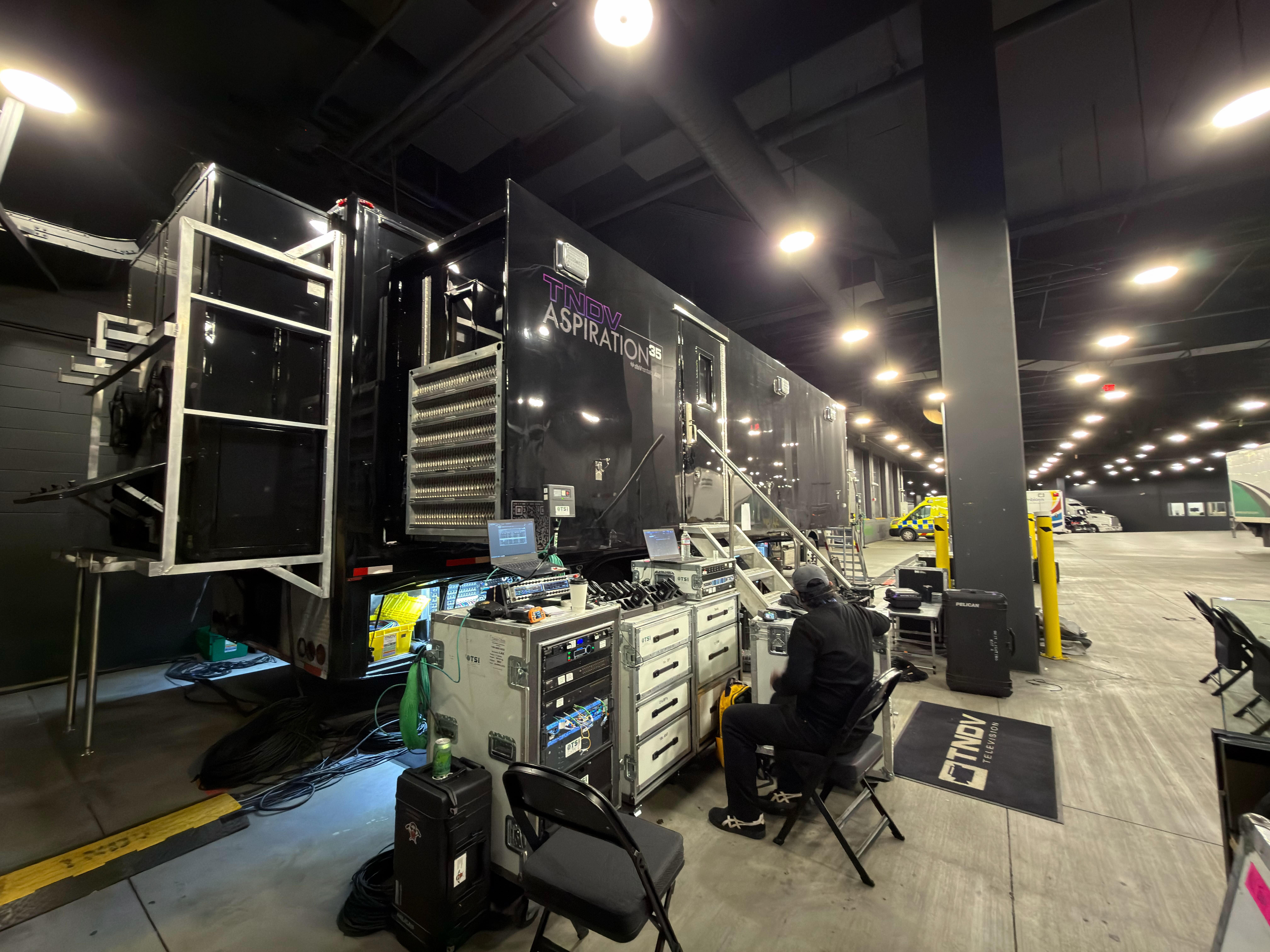
Big news in the domestic production-truck business this week: Live Media Group has acquired Gravity Media’s U.S. mobile-production assets, adding eight units, experienced engineering personnel, and several long-term client contracts to its growing nationwide operation.

The transaction involves three premium production trucks currently assigned to major U.S. broadcast partners and professional events. It also establishes a long-term strategic partnership through which Live Media Group and Gravity Media can combine mobile facilities, RF technology, specialty cameras, flypacks, and other production services for domestic and international clients. Financial terms of the acquisition were not disclosed.

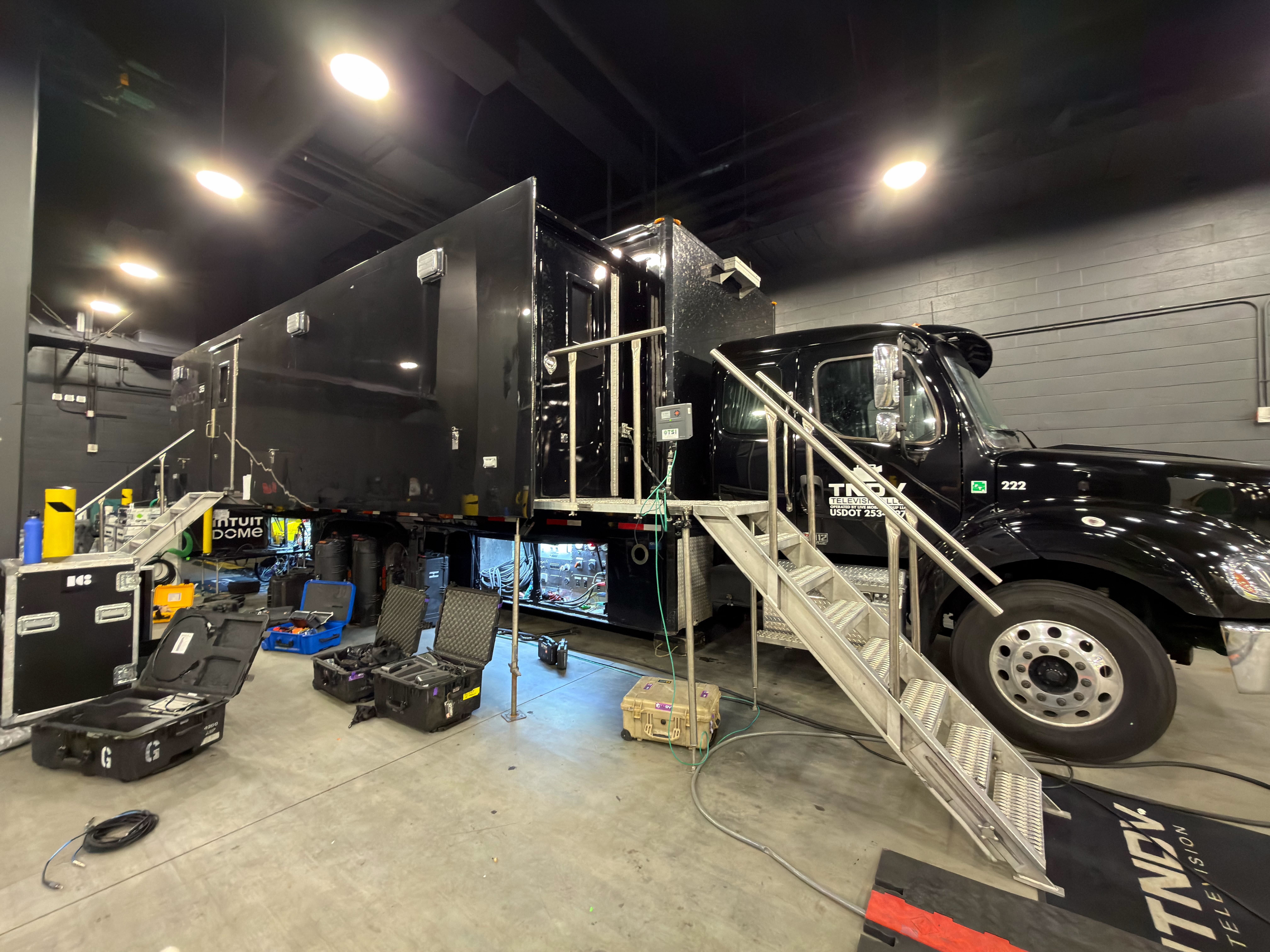
The eight units will join a Live Media Group fleet of more than 35 production trucks. The additional resources will be available across the company’s operating businesses: TNDV Television, Live Media, and GameTime Productions.

“Every acquisition we’ve made has been driven by one objective: creating more opportunities to better serve our clients,” says Live Media Group founder/President/CEO Brad Sexton. “We’ve never pursued growth simply to become bigger. We’ve focused on bringing together exceptional companies, talented people, and complementary capabilities that allow us to deliver more strategic value across the country. This acquisition continues that strategy by expanding our fleet, adding experienced engineering talent, and giving us additional resources to meet growing client demand.”

REMI-Capable Units Fit the Production Model

The acquisition comes as Live Media Group sees increased demand for distributed and at-home production models. According to company executives, several of the newly acquired units are particularly well-suited to the REMI workflows that are a growing part of the company’s business.

Three mobile units — Columbus, Whiskey, and Aspen — stand out as especially strong fits for Live Media Group’s existing operation.

“The fleet complements our fleet and slides into our business model,” says Ryan Hatch, SVP, Live Media Group. “It’s something we’re focused on more: the REMI model, which is what those trucks are built for. Ultimately, I think it increases our focus on that business, and it fits our mold. It’s our niche of hitting that model, which is quite honestly our strength.”

The units also support Full HD and HDR productions, providing Live Media Group with additional assets capable of serving the technical requirements of major sports and entertainment clients.

Sexton cites the expanding use of REMI workflows on events ranging from the FIFA World Cup to golf and the Olympic Games as evidence that the trucks align with where the market is heading. “The majority of World Cup was done with the at-home, full-REMI production model. Then you take the PGA TOUR and the Olympic Games and how they are producing large-scale events. That’s the reason. It’s more assets that will do Full HD, HDR. It just reinforces what our clients are asking for.”

The acquisition offers a faster alternative to designing and constructing new mobile units. He notes that a new production truck can require 12-18 months to complete, whereas acquiring existing assets allows the company to add capacity immediately and integrate the units into its national scheduling operation.

Additional Capacity Addresses Growing Demand

The expansion arrives after a particularly busy period for Live Media Group. Its existing mobile units have routinely been booked throughout much of the year, requiring it to subrent trucks from other providers to fulfill commitments.

That trend, Sexton says, became especially noticeable during 2025, when Live Media Group relied on an unprecedented number of outside units to support contracted productions and longstanding client relationships. The Gravity Media assets provide the company with more control over that capacity while reducing the need to turn down projects or source trucks elsewhere.

“Historically, our mobile units have been fully committed most of the year,” says Michael Sullivan, president, Live Media. “These additional assets immediately provide us with greater scheduling flexibility while allowing us to support more clients without compromising the level of service they’ve come to expect. Rather than turning opportunities away, we’re now positioned to say yes to more productions.”

Along with the physical units, Live Media Group is adding members of Gravity Media’s U.S. engineering and technical team. The personnel bring experience operating the acquired trucks as well as additional skillsets that can be deployed across the broader organization.

The combination of additional trucks, equipment, and personnel is expected to strengthen Live Media Group’s work across sports, entertainment, corporate productions, and other live events. It also gives the company more flexibility during heavily booked portions of the sports calendar, particularly in the fall.

“It gives us more capacity and reach, which ultimately opens more doors for the people we work with,” says Hatch. “The goal has always been simple: be in a position to say yes to more with quality staff and assets. This is a meaningful step in that direction.”

Beyond the Trucks: A Strategic Partnership

Although Live Media Group will own and operate Gravity Media’s U.S. mobile-unit fleet, Gravity Media will remain involved in the market through the strategic partnership.

Gravity Media can continue supporting productions with its RF systems, specialty-camera resources, flypack capabilities, and other services. Live Media Group, meanwhile, will provide mobile-production facilities for Gravity Media’s international customers when they require support for events in the U.S.

The companies have worked together for several years, including instances when Live Media Group rented Gravity Media trucks to address scheduling constraints and when Gravity Media used Live Media Group’s production-packaging capabilities.

That relationship helped make the transaction a natural fit, according to Sexton. “We’ve worked with Gravity for years, both just subrenting their production trucks when our utilization is too high and we can’t cover, or they’ll rely on us on production packaging and different skillsets that we have but they may not have here in the U.S. It’s a natural partnership, and it’s long-term, which is fantastic.”

The continuing relationship gives both companies the ability to assemble broader packages without requiring either side to duplicate every technical capability internally. “This strengthens our ability to scale, expand capabilities, and better support clients across every major market we operate in,” says Jonae Taylor, SVP, sales, Live Media Group. “Alongside additions to our mobile fleet, this partnership also expands what we can offer across RF, specialty cameras, and flypacks for both international and domestic clients.”

The Gravity Media transaction is the latest in a series of acquisitions that have expanded Live Media Group’s footprint. The company acquired SureShot Teleproductions in 2015, TNDV Television and HARB Production Services in 2019, and Lyon Video in 2022.
TV Production Trucks: Why They Remain Essential for High-Quality Live Broadcasts

When audiences watch a live sporting event, concert, corporate announcement, awards show, or major community celebration, they rarely think about the infrastructure making that broadcast possible. They see polished camera angles, smooth replays, sharp graphics, clear commentary, balanced audio, and reliable live delivery across television, streaming, and social platforms. Behind all of that is one of the most important assets in live broadcasting: the TV production truck.

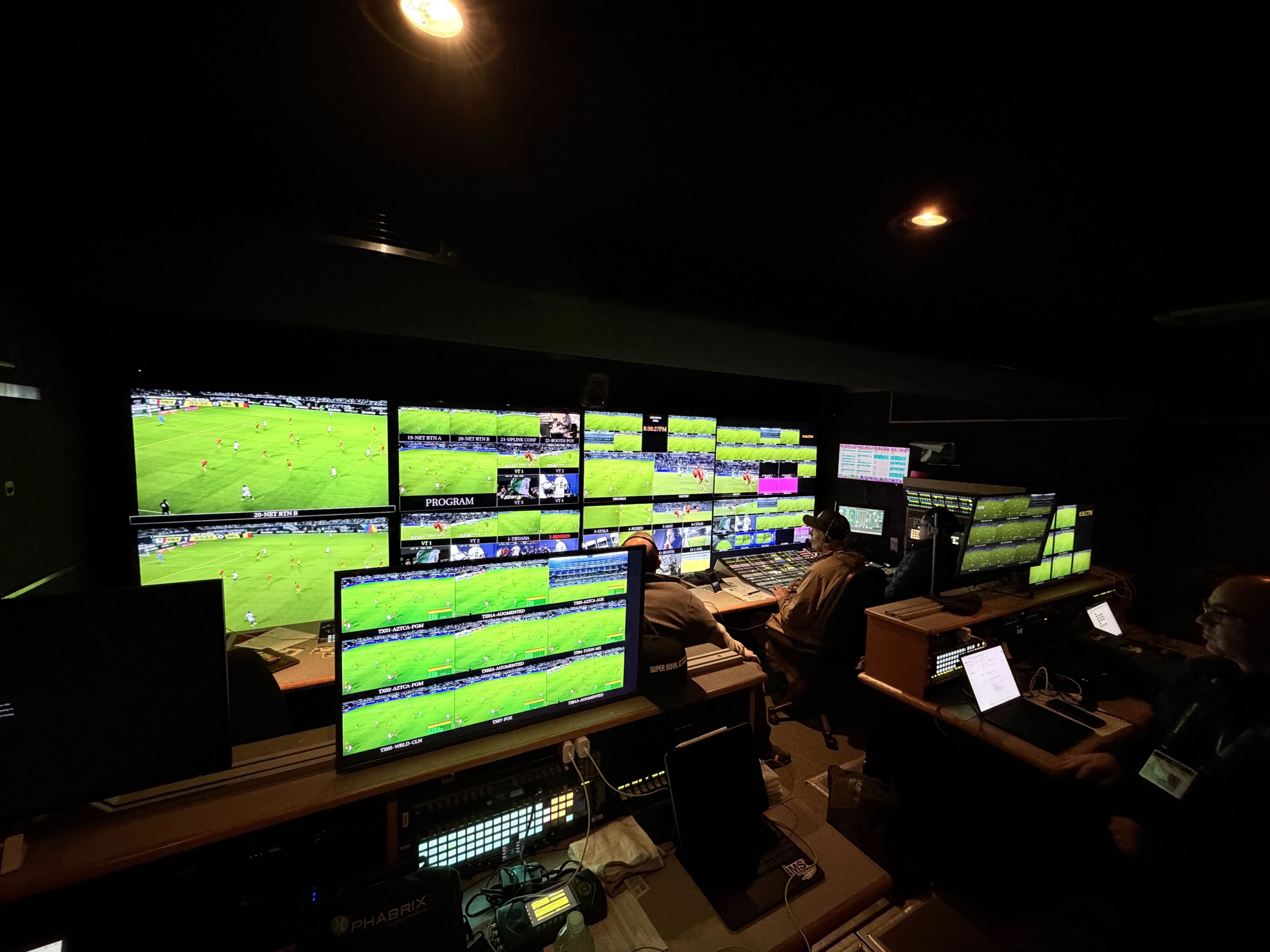
TV production trucks are the command centers of modern live event coverage. They combine video switching, audio mixing, graphics, replay, communications, recording, transmission, and production coordination into one mobile environment. For broadcasters, producers, rights holders, and event organizers, they provide the technical backbone required to execute professional live productions with speed, consistency, and reliability.

For organizations planning a broadcast, webcast, or hybrid event, choosing the right mobile unit partner can directly affect the quality of the final production. That is why experienced providers matter. Live Media Group positions itself as a turnkey production company built to deliver events “flawlessly on any platform anywhere,” with roots dating back to 2002. The company highlights more than 30 mobile production units, fly pack capabilities, systems integration, cloud-based software solutions, a Nashville control room, and experienced crews. Its broader team also notes more than 35 years of mobile unit industry experience and a fleet that includes both 53-foot expando units and smaller 38- to 45-foot mobile production units with uplink capabilities.

What a TV Production Truck Really Does

A TV production truck is far more than a vehicle carrying equipment. It is a fully integrated live production environment engineered to support complex, fast-moving broadcasts on location. Inside, specialized workspaces allow producers, directors, technical directors, audio engineers, replay operators, shader operators, graphics teams, and engineering staff to work in sync.

The reason these trucks remain so essential is simple: live production has very little margin for error. Unlike pre-recorded content, there is no opportunity to redo a camera move, remix the crowd sound, rebuild a live graphic, or recover from poor signal planning once the event is underway. The truck centralizes decision-making and technical execution so the entire show can be managed in real time.

At a high level, a production truck supports camera acquisition, switching, replay, graphics, audio mixing, intercom, recording, transmission, and increasingly, remote integration workflows. Live Media Group’s mobile unit page specifically emphasizes multi-camera capabilities, top-tier broadcast solutions, and the flexibility to support productions at different scales. The company also notes that its fleet spans audio production units, B-units, production units, and uplink hybrid configurations, with support for formats including 1080i/720p HD, 1080P/3G, REMI-only workflows, and UHD/4K.

Why Mobility Still Matters in Modern Broadcast Production

It would be easy to assume that cloud workflows and remote production have reduced the importance of TV production trucks. In practice, the opposite is often true. Modern production trucks are now expected to support both traditional on-site production and advanced remote workflows. That makes them more valuable, not less.

A truck brings critical infrastructure directly to the venue. This matters for sports venues, concert sites, red carpets, festivals, houses of worship, convention centers, and one-off outdoor locations where permanent control room facilities may not exist. Production teams need a predictable, self-contained system that can be deployed quickly and adapted to the demands of each event.

Live Media Group directly reflects this hybrid reality in its capabilities. The company states that its control rooms are integrated with its mobile TV production trucks to support REMI workflows, and it highlights Ross Video Ultrix Acuity platforms and XPression graphics as part of that production environment. It also promotes centralized production with reduced on-site resources, which is increasingly important for cost control, scheduling flexibility, and multi-event coverage.

In other words, today’s best production trucks are not just rolling control rooms. They are flexible live production hubs that can connect field operations, centralized facilities, streaming platforms, and transmission paths into one cohesive workflow.

The Value of the Right Fleet

Not every event requires the same kind of unit. A major national sports broadcast has very different needs than a corporate town hall, music special, collegiate event, house of worship production, or branded content activation. That is why fleet depth matters.

Live Media Group’s public materials point to a broad mobile unit inventory with more than 30 units at the company level and a variety of body styles and specialty roles across the fleet. The company’s mobile unit collection includes numerous named units and configurations, while its About page notes that its Live Media division travels nationally and globally, and that its entertainment division, TNDV, operates straight body and expando units as well as flypacks and a dedicated control room.

For clients, this matters because the right mobile unit strategy helps balance performance and budget. A right-sized truck can provide the necessary technical power without overbuilding the show. On the other hand, when a production requires more replay, more cameras, larger audio capability, more graphics positions, or stronger transmission resources, a robust fleet gives producers room to scale. The advantage is not simply having trucks. It is having options.

More Than Video: The Full Production Ecosystem

One of the biggest misconceptions about TV production trucks is that they are mostly about cameras and switching. In reality, the success of a live broadcast depends on many systems working together.

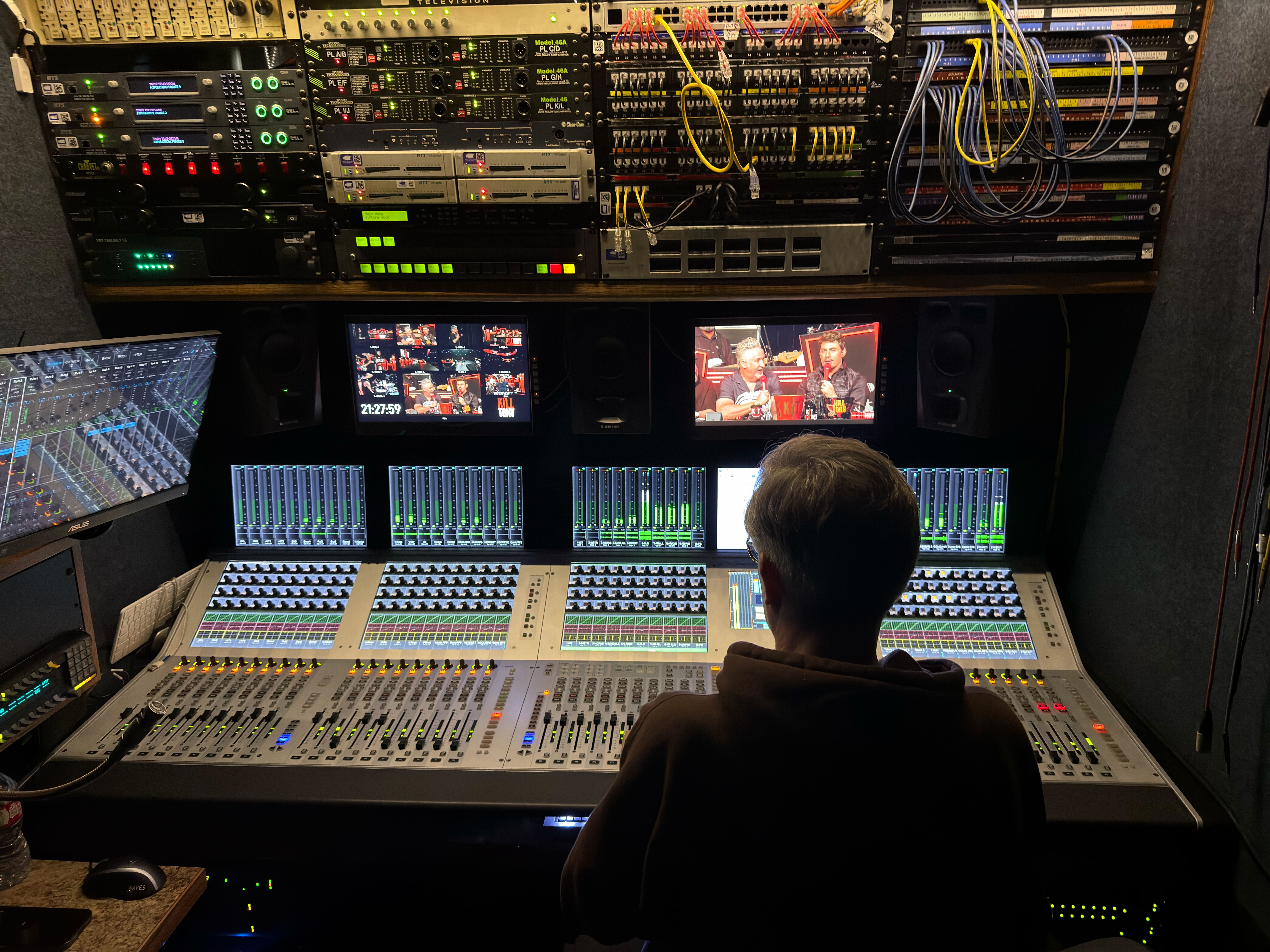
Audio is a prime example. Crowd sound, announcer microphones, music elements, playback, IFB, intercom, and mix-minus feeds all require careful coordination. Live Media Group highlights advanced audio recording through multitrack flypacks with MADI technology and up to 96-channel Pro Tools integration, positioning those capabilities as valuable both inside OB truck environments and in standalone setups.

Communications are equally important. Directors, producers, camera operators, stage managers, engineering teams, and talent all depend on clear, reliable talkback and monitoring systems to execute a live show. Likewise, graphics and replay are essential to storytelling. Whether the production is a sports telecast, an awards event, or a corporate launch, visual enhancement and instant playback help turn raw coverage into a finished broadcast product.

Transmission is another critical piece. A beautifully produced show has limited value if it cannot get to air or reach streaming viewers reliably. Live Media Group states that its OB trucks and mobile TV trucks can be equipped with Ku-band and C-band uplink services, with LiveU bonded cellular backup for uninterrupted coverage. It also notes HD and 4K streaming capabilities and secure, high-speed internet connectivity for uninterrupted live feeds.

Taken together, those details reflect what clients should expect from a serious mobile production partner: not just cameras and monitors, but a complete production ecosystem.

Why Experience Still Separates Great Broadcast Partners

Technology matters, but crews and operational expertise matter just as much. Live production is a coordination challenge as much as a technical one. Truck design, signal flow, comms planning, engineering redundancy, staffing, scheduling, and venue logistics all shape the outcome.

Live Media Group emphasizes experienced crews on its About page and describes its divisions as serving a wide range of event types, from red carpet events and movie premieres to entertainment, corporate, religious, and sporting productions. The company also notes roots dating back to 2002 and says its team brings over 35 years of mobile unit industry experience to every event.

That kind of experience matters because every venue presents unique conditions. Space may be tight. Power may be limited. Connectivity may need backup planning. Weather can shift. Timelines change. Production priorities evolve on site. A seasoned mobile unit partner is able to solve problems without sacrificing show quality.

TV Production Trucks and the Future of Live Content

Live production is expanding, not shrinking. Audiences expect more content, on more platforms, with better quality and faster turnaround. Events that once had only a simple in-room AV setup are now expected to support live streaming, social cutdowns, archival recording, sponsor integration, and multi-destination delivery.

This trend increases the value of modern TV production trucks because they help event owners deliver broadcast-grade production wherever the event happens. They also create flexibility for organizations that want to reach viewers beyond the venue itself. Sports organizations, entertainment producers, brands, agencies, universities, and corporations all benefit from mobile production resources that can adapt to television, streaming, and hybrid distribution.

Live Media Group’s positioning reflects this broader market demand. Across its fleet and divisions, the company promotes mobile units, flypacks, cloud-based software solutions, systems integration, and remote production support. That combination suggests a live production partner designed not only for traditional broadcast, but for the increasingly blended reality of modern media delivery.

Choosing the Right Partner

When evaluating TV production truck providers, the most important questions are practical ones. Does the company have the right range of units? Can it support the format and scale of the event? Does it offer strong audio, graphics, replay, and transmission capabilities? Can it handle both on-site and remote workflows? Does it have experienced crews and a track record across different production environments?

For many clients, the answer lies in finding a provider that can combine advanced equipment with real operational depth. Live Media Group presents itself as exactly that kind of partner: a company with a broad mobile unit fleet, support for HD, 3G, REMI, and 4K workflows, flypack and control room integration, uplink and streaming capabilities, and experienced teams serving productions across the country and beyond.

In live broadcasting, quality is never accidental. It is built through planning, infrastructure, and execution. TV production trucks remain central to that process because they bring all three together in one mobile platform. For organizations that need dependable, high-level live production, the right truck is not just a convenience. It is the engine behind the show.

FAQ

What is a TV production truck?
A TV production truck is a mobile broadcast control room used to produce live events on location. It typically houses video switching, audio mixing, replay, graphics, communications, recording, and transmission systems.

What types of events use TV production trucks?
TV production trucks are used for sports, concerts, corporate events, awards shows, red carpet productions, religious events, festivals, news coverage, and other live broadcasts or streams.

Why are TV production trucks still important if REMI and remote production exist?
Modern trucks support both on-site and remote workflows. They provide dependable infrastructure at the venue while also connecting to centralized control rooms and remote production systems.

What should I look for in a mobile production partner?
Look for fleet variety, experienced crews, strong engineering support, audio and graphics capabilities, transmission options, replay resources, and the ability to scale for different event types.

Does Live Media Group offer more than traditional mobile units?
Yes. Based on its public website, Live Media Group also offers fly pack capabilities, systems integration, cloud-based software solutions, and a control room in Nashville, along with a large mobile production fleet.

Can TV production trucks support streaming as well as broadcast television?
Yes. Today’s mobile units are often designed to support both traditional television distribution and live streaming, including multi-platform delivery.

Do all events need the same kind of truck?
No. The right unit depends on the size and complexity of the production, including camera count, audio needs, graphics requirements, replay demands, and transmission needs.

I can also turn this into a more SEO-driven version targeting phrases like “tv production trucks,” “mobile production trucks,” and “outside broadcast trucks” more aggressively.


The Role of Mobile TV Trucks in Modern Video Production

In today’s fast-paced media landscape, the demand for high-quality live video content is greater than ever. From live sports broadcasts and music festivals to corporate events and breaking news coverage, producers require flexible, powerful, and reliable solutions to bring content to audiences in real time. This is where mobile TV trucks, also known as mobile broadcast trucks, OB (Outside Broadcast) units, and mobile video production trucks, play a crucial role.

At Live Media Group, we specialize in providing state-of-the-art mobile TV production trucks designed to deliver broadcast-quality video and audio from virtually any location. In this article, we’ll explore how these vehicles operate, the technology they house, and why they’re indispensable to modern video production workflows.

What Is a Mobile TV Truck?

A mobile TV truck is a specialized vehicle that serves as a mobile control room for live video and audio production. These trucks are fully outfitted with the equipment and personnel needed to produce, switch, mix, and transmit content from remote locations. Often referred to as OB trucks (short for Outside Broadcast), these units are the backbone of live event broadcasting and streaming.

At their core, mobile video production trucks offer the same capabilities as a traditional television studio-except everything is housed in a trailer or expando vehicle that can be driven directly to a venue. Whether it’s a concert in a stadium, a red-carpet premiere, or a government press conference, mobile production trucks are engineered to be deployed wherever the story unfolds.

Mobile Video Production Trucks: What’s Inside?

A high-end video production truck includes an array of cutting-edge technology that supports end-to-end content creation. At Live Media Group, our fleet includes everything from compact single-expando units to full double-expando production and transmission powerhouses.

  • Inside a typical mobile broadcast truck, you’ll find:
  • Production switchers such as Grass Valley Kayenne or K-Frame series
  • Multiview monitoring walls for directors, producers, and TDs
  • Audio consoles like Calrec Artemis, Apollo, or Argo for surround sound mixing
  • Replay systems such as EVS XT-Via or XT3 servers
  • Camera control units (CCUs) and tally systems
  • Routing infrastructure, including Evertz and Ross video/audio routers
  • Comms systems, including RTS ADAM or ODIN matrix intercoms
  • Power and environmental systems for field reliability
  • IP and baseband hybrid capabilities, including ST2110 and SMPTE routing

These trucks are staffed by directors, engineers, audio technicians, replay operators, shader techs, and production managers who collaborate in real time to produce a seamless broadcast or stream.

Why Use a Mobile Broadcast Truck?

The use of a mobile broadcast truck brings unmatched flexibility to productions that cannot be confined to a studio. Here’s why these units are so valuable:

  1. Remote Capability: OB trucks enable full-scale production in remote or temporary locations where permanent infrastructure does not exist. Whether it’s a beach, racetrack, mountain summit, or urban plaza, these trucks bring the studio to the scene.
  1. Time Efficiency: Live productions often operate on tight schedules. Mobile production trucks can be deployed quickly, set up efficiently, and strike rapidly post-show-saving crews valuable time and reducing logistical complexity.
  1. Scalability: From small single-camera events to massive multi-camera broadcasts with 20+ sources, mobile video production trucks can be scaled to meet the needs of the production. Trucks can also be paired with support units and flypacks to further extend functionality.
  1. Cost-Effective: Compared to building out a temporary control room from scratch, mobile TV trucks offer a cost-effective, all-in-one solution that reduces equipment rental, setup, and coordination overhead.
  1. Broadcast and Streaming Integration: Modern mobile TV trucks are equipped not only for broadcast transmission but also for simultaneous streaming, recording, and post-production handoff. This hybrid capability is crucial for today’s multi-platform distribution strategies.

Mobile TV Trucks and Live Media Group

At Live Media Group, we operate one of the most technically advanced and versatile fleets of mobile broadcast trucks in the United States. Our lineup includes:

  • UHD, HDR-ready mobile control units
  • Dedicated REMI (Remote Integration Model) trucks for decentralized workflows
  • OB trucks with integrated C-band and Ku-band uplink systems
  • Single and double expando vehicles
  • Audio-dedicated trucks with world-class consoles and multi-track recording
  • Support trailers with flypack staging, crew workstations, and engineering bays
  • Each mobile TV truck is built to support live television, event streaming, corporate AV, and government production workflows, with flexibility for IP, SDI, or hybrid infrastructures.

Outside Broadcast: Evolving with Technology

The concept of Outside Broadcast (OB) has existed for decades, but the technology within OB trucks continues to evolve. Today’s OB units support IP-based production, real-time remote contribution, and even virtualized control rooms. As production demands grow more complex, mobile production trucks have evolved into command centers capable of everything from local switching to cloud-based integration.

At Live Media Group, our OB solutions are future-ready-supporting 3G, 12G, ST2110, MADI, DANTE, and SMPTE 2110 signal types, along with advanced routing, monitoring, and comms systems for hybrid cloud-ground environments.

Choosing the Right Mobile Video Production Truck

When planning a production, choosing the right video production truck is critical. Consider the following factors:

  • Event scale (number of cameras, replay, graphics)
  • Transmission needs (broadcast, streaming, satellite uplink)
  • Audio requirements (surround mixing, multi-track, comms complexity)
  • Venue logistics (space constraints, power availability)
  • Crew size and workstation configuration

Live Media Group offers production planning and truck configuration consultation to help clients select the right unit-or combination of units-for each show.

Frequently Asked Questions (FAQ)

What is a mobile TV truck used for?

A mobile TV truck is used to produce, switch, mix, and broadcast or stream live video content from a remote location. It acts as a mobile studio control room.

What’s the difference between a mobile video production truck and an OB truck?

They are often the same thing. OB (Outside Broadcast) truck is the traditional term used in the broadcast industry, while “mobile video production truck” is more common in digital and hybrid workflows.

How many cameras can a mobile TV truck support?

It depends on the truck. Some support 4-6 cameras, while larger OB units can support 12-20+ cameras including specialty formats like super-slo-mo, RF, and POV.

Can mobile broadcast trucks handle live streaming?

Yes. Most modern mobile broadcast trucks are fully capable of integrating live streaming platforms alongside traditional broadcast transmission paths.

What types of events use OB trucks?

Live sports, music festivals, political events, conferences, red carpet shows, esports tournaments, and breaking news coverage all rely on OB trucks for reliable, high-quality live production.

How much does it cost to rent a mobile video production truck?

Costs vary based on truck size, duration, crew needs, and location. Live Media Group offers scalable solutions from compact REMI trucks to large UHD OB units-contact our team for pricing.

Bring the Studio to the Field with Live Media Group

Whether you need a mobile TV truck, an OB production unit, or a mobile broadcast truck integrated with satellite uplink and REMI capabilities, Live Media Group has the expertise and the fleet to deliver. Our team supports everything from high-profile live sports broadcasts to corporate communications and branded digital experiences-with a commitment to flexibility, reliability, and innovation.


To learn more about our mobile units, contact our production team directly at solutions@livemediagroup.com or call 833.933.5483.

Mobile Unit Snapshot: MU-B9 A 53′ Advanced Support Unit for REMI and Hybrid Workflows

MU-B9 | 53-Foot Single Expando Broadcast Support Trailer

Modular Mobile Work Trailer for Engineering, Production, and REMI Workflows

The MU-B9 is a 53-foot single-expando support trailer purpose-built to provide technical workspaces, engineering infrastructure, and overflow capacity for complex live production environments. Designed for maximum functionality in remote and hybrid broadcast workflows, MU-B9 delivers 10 fully equipped operator workstations, dual climate zones, and a segmented interior layout to support multiple departments simultaneously. It is ideal for REMI deployments, flypack integration, broadcast truck compounds, or any large-scale event requiring flexible work and coordination space in the field.

With a footprint of 60 feet by 23 feet when fully expanded, MU-B9 offers dedicated spaces for engineering staff, show callers, production leads, A1 audio techs, data engineers, and comms personnel. Its zone-based layout and robust cable infrastructure make it a versatile companion to mobile control rooms and production vehicles such as MU-14, MU-16, or MU-28.

Key Specifications

Trailer Length: 53 feet
Working Footprint (Expanded): 60 ft (L) x 23 ft (W)
Structure Type: Single Expando
Operator Positions: 10 Configurable Workstations
Power: Single Phase, 208V, 150 Amps
Power Connection: Camlock connectors (shore or generator)
Air Conditioning: Dual HVAC Units (rear and mid-trailer)
Recommended Setup Area: 60 ft x 23 ft
Gross Vehicle Weight: Not specified (standard class for 53-foot support units)

Interior Floorplan and Work Zones

MU-B9 is designed around five independent work zones that keep technical, production, and audio workflows separated but connected:

  • Production Zone: Features seven operator seats in a shared deskline. This area is used for producers, show callers, technical directors, EICs, and coordination staff. It offers a collaborative layout for managing onsite operations.
  • Engineering Room (ENG): Includes two workstations for routing, signal integrity, fiber patching, or system monitoring. It is designed to isolate technical workflows and reduce noise interference.
  • Audio Bay: Centrally located and acoustically treated, the audio bay supports A1 engineers, intercom leads, and monitoring roles. It provides a quiet environment for precision audio operations.
  • Flex Zones 2 and 3: Floating workspaces ideal for data techs, IT staff, network engineers, and overflow crew. These spaces support network control, IP management, or comms operations.

Multiple entry points provide direct access to key areas of the trailer, reducing traffic through signal-sensitive zones and improving efficiency during high-demand show operations.

Cable Infrastructure

MU-B9 includes customizable cable infrastructure based on project needs. Live Media Group configures each deployment with the appropriate inventory, including:

  • SMPTE hybrid fiber
  • DT12 audio multicore
  • TAC-12 tactical fiber
  • Triax camera cable
  • Analog XLR audio
  • 5-wire and 10-wire coaxial looms

The trailer is commonly deployed as a cable patch hub or fiber termination point, supporting both truck-based and flypack-based systems in live production environments.

Use Cases

MU-B9 is engineered to serve a wide range of remote production needs, including:

  • Technical overflow during multi-unit productions
  • REMI support for switching and replay housed in centralized facilities
  • Onsite engineering and routing control
  • Production management and show calling in large venues
  • Signal patching, network monitoring, and fiber management
  • Audio comms and intercom prep
  • Temporary control or recovery environments for mission-critical live broadcasts

Why MU-B9 Stands Out

MU-B9 is more than a workspace—it’s a production-critical asset that expands a crew’s operational capacity without requiring a full mobile control room. Its single-expando design offers expanded square footage with easier deployment logistics than dual-expandos. The trailer’s climate control, dedicated audio and engineering bays, and flexible workstation setup make it indispensable in large, complex shows where additional headcount and infrastructure are required.

MU-B9 is an ideal companion to REMI broadcast trucks, central control rooms, and multi-city live productions, enabling teams to scale quickly while maintaining signal integrity, crew efficiency, and workflow separation.

Contact for Booking or Custom Configuration

To schedule MU-B9 or request a custom cable configuration:

Phone: 833.933.54483
Email: solutions@livemediagroup.com
Reference MU-B9 in your inquiry.


Truck Parent Page

a:7:{s:8:”location”;a:1:{i:0;a:1:{i:0;a:3:{s:5:”param”;s:13:”page_template”;s:8:”operator”;s:2:”==”;s:5:”value”;s:25:”template-truck-parent.php”;}}}s:8:”position”;s:6:”normal”;s:5:”style”;s:7:”default”;s:15:”label_placement”;s:3:”top”;s:21:”instruction_placement”;s:5:”label”;s:14:”hide_on_screen”;s:0:””;s:11:”description”;s:0:””;}

Truck Details

a:8:{s:8:”location”;a:1:{i:0;a:1:{i:0;a:3:{s:5:”param”;s:9:”post_type”;s:8:”operator”;s:2:”==”;s:5:”value”;s:6:”trucks”;}}}s:8:”position”;s:6:”normal”;s:5:”style”;s:7:”default”;s:15:”label_placement”;s:3:”top”;s:21:”instruction_placement”;s:5:”label”;s:14:”hide_on_screen”;s:0:””;s:11:”description”;s:0:””;s:12:”show_in_rest”;i:0;}