
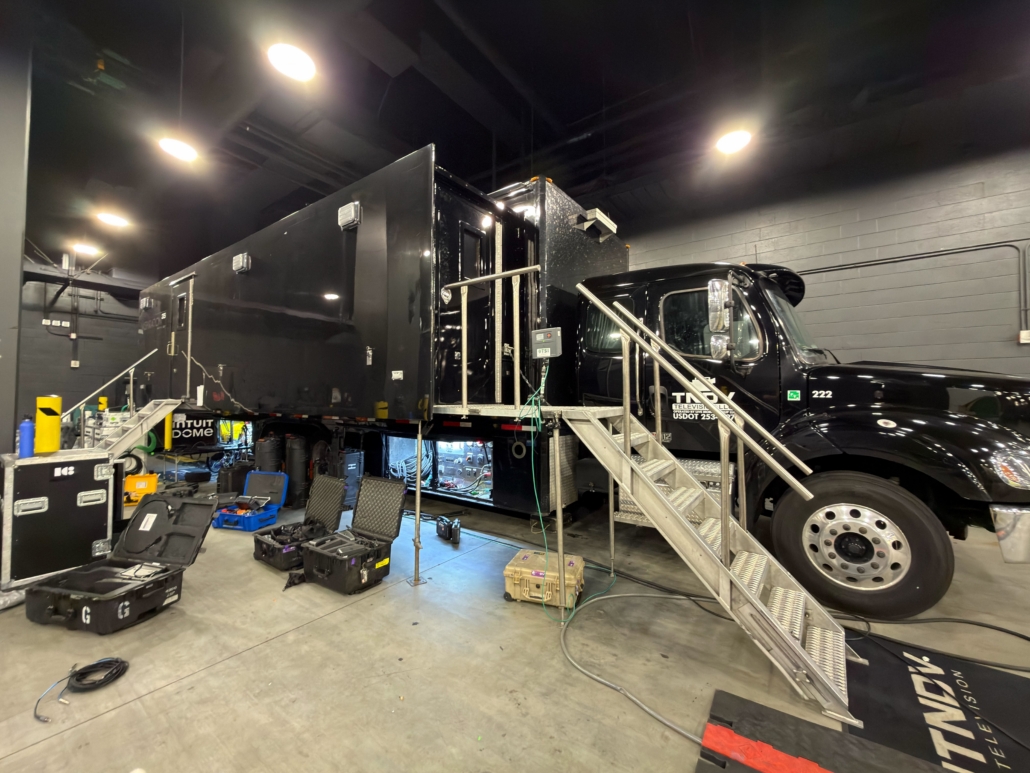
TV Production Trucks: Why They Remain Essential for High-Quality Live Broadcasts
When audiences watch a live sporting event, concert, corporate announcement, awards show, or major community celebration, they rarely think about the infrastructure making that broadcast possible. They see polished camera angles, smooth replays, sharp graphics, clear commentary, balanced audio, and reliable live delivery across television, streaming, and social platforms. Behind all of that is one of the most important assets in live broadcasting: the TV production truck.
TV production trucks are the command centers of modern live event coverage. They combine video switching, audio mixing, graphics, replay, communications, recording, transmission, and production coordination into one mobile environment. For broadcasters, producers, rights holders, and event organizers, they provide the technical backbone required to execute professional live productions with speed, consistency, and reliability.
For organizations planning a broadcast, webcast, or hybrid event, choosing the right mobile unit partner can directly affect the quality of the final production. That is why experienced providers matter. Live Media Group positions itself as a turnkey production company built to deliver events “flawlessly on any platform anywhere,” with roots dating back to 2002. The company highlights more than 30 mobile production units, fly pack capabilities, systems integration, cloud-based software solutions, a Nashville control room, and experienced crews. Its broader team also notes more than 35 years of mobile unit industry experience and a fleet that includes both 53-foot expando units and smaller 38- to 45-foot mobile production units with uplink capabilities.
What a TV Production Truck Really Does
A TV production truck is far more than a vehicle carrying equipment. It is a fully integrated live production environment engineered to support complex, fast-moving broadcasts on location. Inside, specialized workspaces allow producers, directors, technical directors, audio engineers, replay operators, shader operators, graphics teams, and engineering staff to work in sync.
The reason these trucks remain so essential is simple: live production has very little margin for error. Unlike pre-recorded content, there is no opportunity to redo a camera move, remix the crowd sound, rebuild a live graphic, or recover from poor signal planning once the event is underway. The truck centralizes decision-making and technical execution so the entire show can be managed in real time.
At a high level, a production truck supports camera acquisition, switching, replay, graphics, audio mixing, intercom, recording, transmission, and increasingly, remote integration workflows. Live Media Group’s mobile unit page specifically emphasizes multi-camera capabilities, top-tier broadcast solutions, and the flexibility to support productions at different scales. The company also notes that its fleet spans audio production units, B-units, production units, and uplink hybrid configurations, with support for formats including 1080i/720p HD, 1080P/3G, REMI-only workflows, and UHD/4K.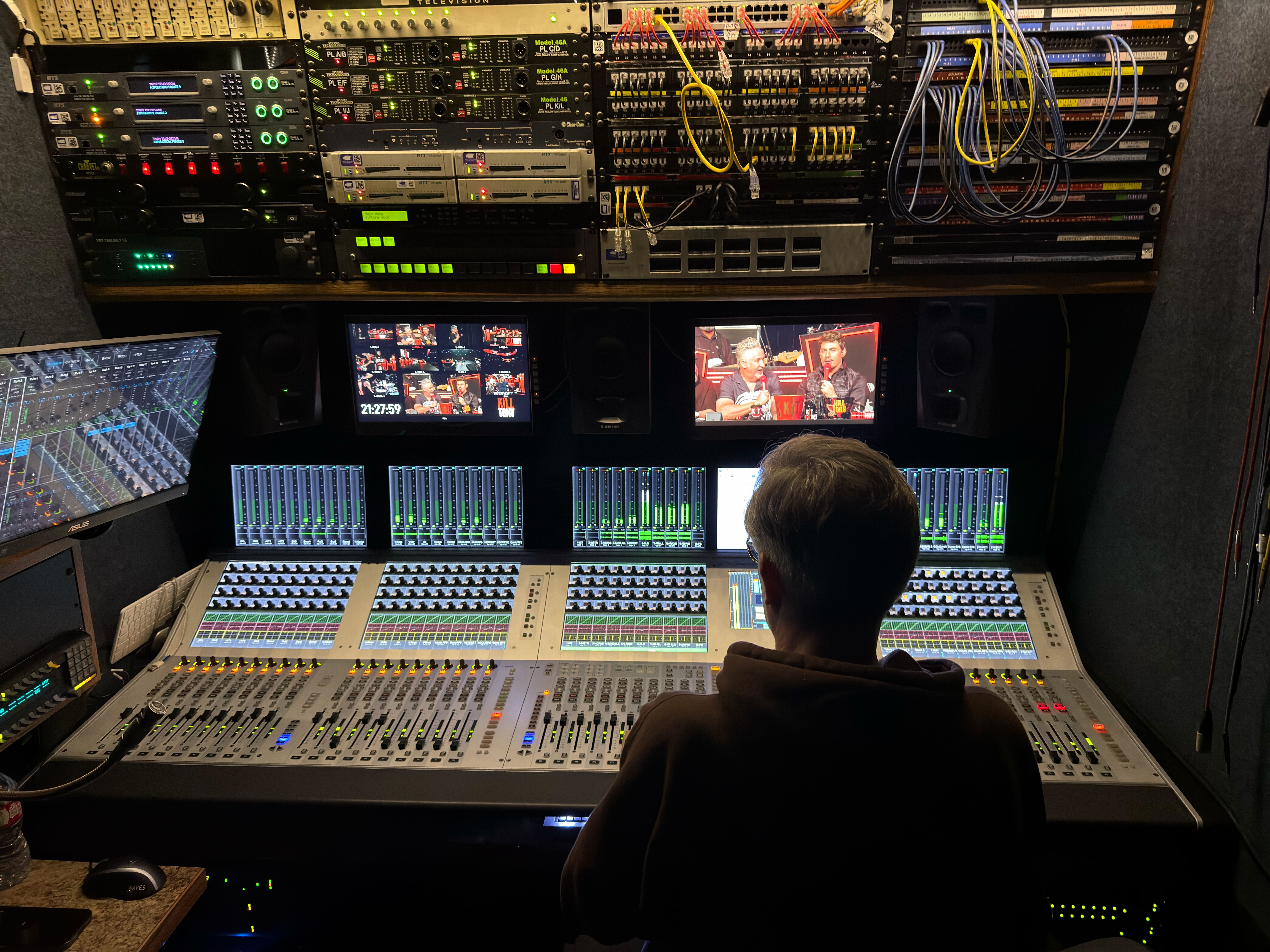
Why Mobility Still Matters in Modern Broadcast Production
It would be easy to assume that cloud workflows and remote production have reduced the importance of TV production trucks. In practice, the opposite is often true. Modern production trucks are now expected to support both traditional on-site production and advanced remote workflows. That makes them more valuable, not less.
A truck brings critical infrastructure directly to the venue. This matters for sports venues, concert sites, red carpets, festivals, houses of worship, convention centers, and one-off outdoor locations where permanent control room facilities may not exist. Production teams need a predictable, self-contained system that can be deployed quickly and adapted to the demands of each event.
Live Media Group directly reflects this hybrid reality in its capabilities. The company states that its control rooms are integrated with its mobile TV production trucks to support REMI workflows, and it highlights Ross Video Ultrix Acuity platforms and XPression graphics as part of that production environment. It also promotes centralized production with reduced on-site resources, which is increasingly important for cost control, scheduling flexibility, and multi-event coverage.
In other words, today’s best production trucks are not just rolling control rooms. They are flexible live production hubs that can connect field operations, centralized facilities, streaming platforms, and transmission paths into one cohesive workflow.
The Value of the Right Fleet
Not every event requires the same kind of unit. A major national sports broadcast has very different needs than a corporate town hall, music special, collegiate event, house of worship production, or branded content activation. That is why fleet depth matters.
Live Media Group’s public materials point to a broad mobile unit inventory with more than 30 units at the company level and a variety of body styles and specialty roles across the fleet. The company’s mobile unit collection includes numerous named units and configurations, while its About page notes that its Live Media division travels nationally and globally, and that its entertainment division, TNDV, operates straight body and expando units as well as flypacks and a dedicated control room.
For clients, this matters because the right mobile unit strategy helps balance performance and budget. A right-sized truck can provide the necessary technical power without overbuilding the show. On the other hand, when a production requires more replay, more cameras, larger audio capability, more graphics positions, or stronger transmission resources, a robust fleet gives producers room to scale. The advantage is not simply having trucks. It is having options.
More Than Video: The Full Production Ecosystem
One of the biggest misconceptions about TV production trucks is that they are mostly about cameras and switching. In reality, the success of a live broadcast depends on many systems working together.
Audio is a prime example. Crowd sound, announcer microphones, music elements, playback, IFB, intercom, and mix-minus feeds all require careful coordination. Live Media Group highlights advanced audio recording through multitrack flypacks with MADI technology and up to 96-channel Pro Tools integration, positioning those capabilities as valuable both inside OB truck environments and in standalone setups.
Communications are equally important. Directors, producers, camera operators, stage managers, engineering teams, and talent all depend on clear, reliable talkback and monitoring systems to execute a live show. Likewise, graphics and replay are essential to storytelling. Whether the production is a sports telecast, an awards event, or a corporate launch, visual enhancement and instant playback help turn raw coverage into a finished broadcast product.
Transmission is another critical piece. A beautifully produced show has limited value if it cannot get to air or reach streaming viewers reliably. Live Media Group states that its OB trucks and mobile TV trucks can be equipped with Ku-band and C-band uplink services, with LiveU bonded cellular backup for uninterrupted coverage. It also notes HD and 4K streaming capabilities and secure, high-speed internet connectivity for uninterrupted live feeds.
Taken together, those details reflect what clients should expect from a serious mobile production partner: not just cameras and monitors, but a complete production ecosystem.
Why Experience Still Separates Great Broadcast Partners
Technology matters, but crews and operational expertise matter just as much. Live production is a coordination challenge as much as a technical one. Truck design, signal flow, comms planning, engineering redundancy, staffing, scheduling, and venue logistics all shape the outcome.
Live Media Group emphasizes experienced crews on its About page and describes its divisions as serving a wide range of event types, from red carpet events and movie premieres to entertainment, corporate, religious, and sporting productions. The company also notes roots dating back to 2002 and says its team brings over 35 years of mobile unit industry experience to every event.
That kind of experience matters because every venue presents unique conditions. Space may be tight. Power may be limited. Connectivity may need backup planning. Weather can shift. Timelines change. Production priorities evolve on site. A seasoned mobile unit partner is able to solve problems without sacrificing show quality.
TV Production Trucks and the Future of Live Content
Live production is expanding, not shrinking. Audiences expect more content, on more platforms, with better quality and faster turnaround. Events that once had only a simple in-room AV setup are now expected to support live streaming, social cutdowns, archival recording, sponsor integration, and multi-destination delivery.
This trend increases the value of modern TV production trucks because they help event owners deliver broadcast-grade production wherever the event happens. They also create flexibility for organizations that want to reach viewers beyond the venue itself. Sports organizations, entertainment producers, brands, agencies, universities, and corporations all benefit from mobile production resources that can adapt to television, streaming, and hybrid distribution.
Live Media Group’s positioning reflects this broader market demand. Across its fleet and divisions, the company promotes mobile units, flypacks, cloud-based software solutions, systems integration, and remote production support. That combination suggests a live production partner designed not only for traditional broadcast, but for the increasingly blended reality of modern media delivery.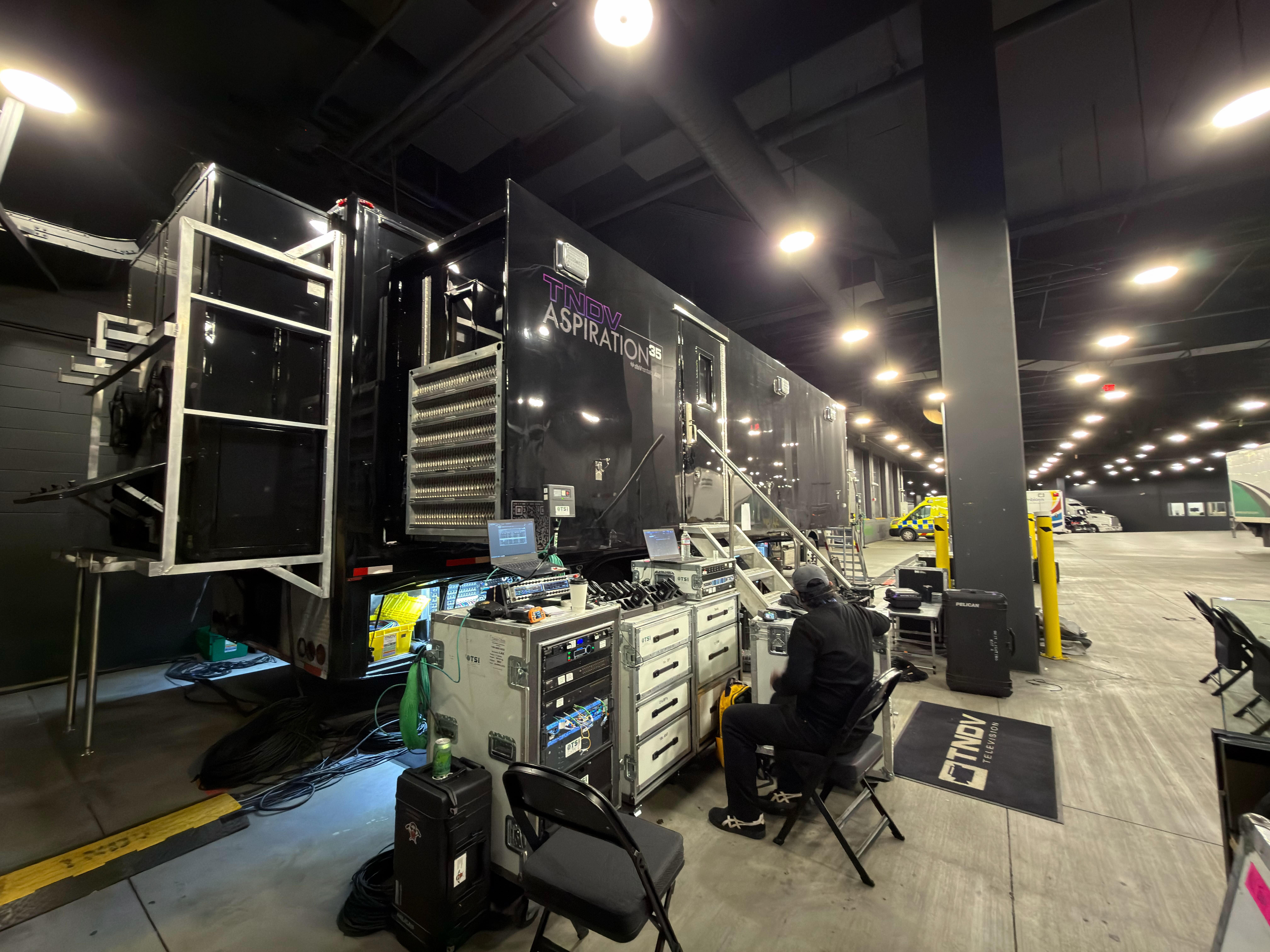
Choosing the Right Partner
When evaluating TV production truck providers, the most important questions are practical ones. Does the company have the right range of units? Can it support the format and scale of the event? Does it offer strong audio, graphics, replay, and transmission capabilities? Can it handle both on-site and remote workflows? Does it have experienced crews and a track record across different production environments?
For many clients, the answer lies in finding a provider that can combine advanced equipment with real operational depth. Live Media Group presents itself as exactly that kind of partner: a company with a broad mobile unit fleet, support for HD, 3G, REMI, and 4K workflows, flypack and control room integration, uplink and streaming capabilities, and experienced teams serving productions across the country and beyond.
In live broadcasting, quality is never accidental. It is built through planning, infrastructure, and execution. TV production trucks remain central to that process because they bring all three together in one mobile platform. For organizations that need dependable, high-level live production, the right truck is not just a convenience. It is the engine behind the show.
FAQ
What is a TV production truck?
A TV production truck is a mobile broadcast control room used to produce live events on location. It typically houses video switching, audio mixing, replay, graphics, communications, recording, and transmission systems.
What types of events use TV production trucks?
TV production trucks are used for sports, concerts, corporate events, awards shows, red carpet productions, religious events, festivals, news coverage, and other live broadcasts or streams.
Why are TV production trucks still important if REMI and remote production exist?
Modern trucks support both on-site and remote workflows. They provide dependable infrastructure at the venue while also connecting to centralized control rooms and remote production systems.
What should I look for in a mobile production partner?
Look for fleet variety, experienced crews, strong engineering support, audio and graphics capabilities, transmission options, replay resources, and the ability to scale for different event types.
Does Live Media Group offer more than traditional mobile units?
Yes. Based on its public website, Live Media Group also offers fly pack capabilities, systems integration, cloud-based software solutions, and a control room in Nashville, along with a large mobile production fleet.
Can TV production trucks support streaming as well as broadcast television?
Yes. Today’s mobile units are often designed to support both traditional television distribution and live streaming, including multi-platform delivery.
Do all events need the same kind of truck?
No. The right unit depends on the size and complexity of the production, including camera count, audio needs, graphics requirements, replay demands, and transmission needs.
I can also turn this into a more SEO-driven version targeting phrases like “tv production trucks,” “mobile production trucks,” and “outside broadcast trucks” more aggressively.